
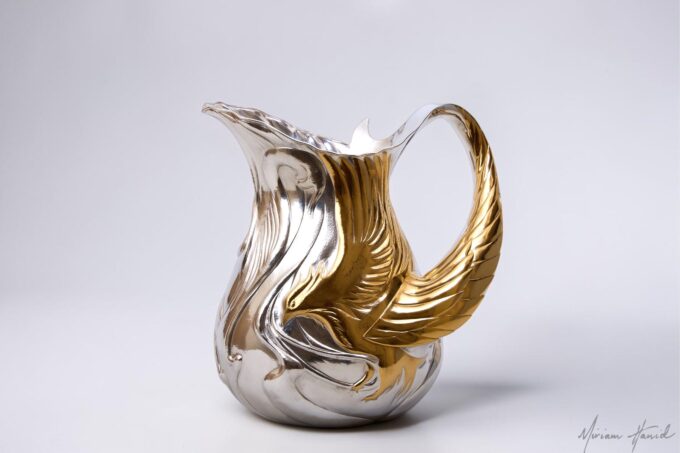
Temple Newsam House’s curator, Adam Toole commissioned a design for the newly renovated Butlers’ Pantry where an impressive collection of both historic and contemporary silver pieces is on display.
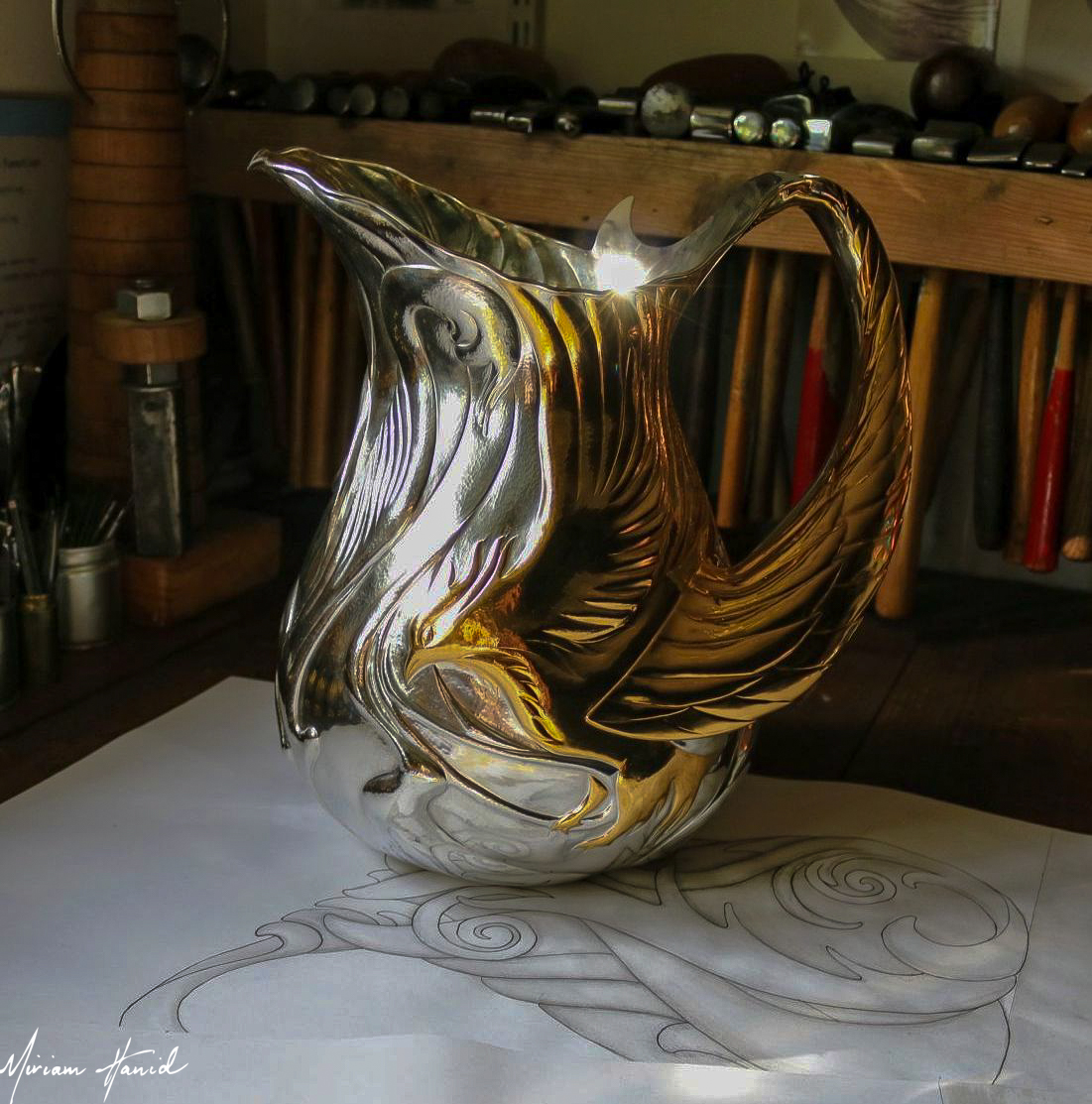
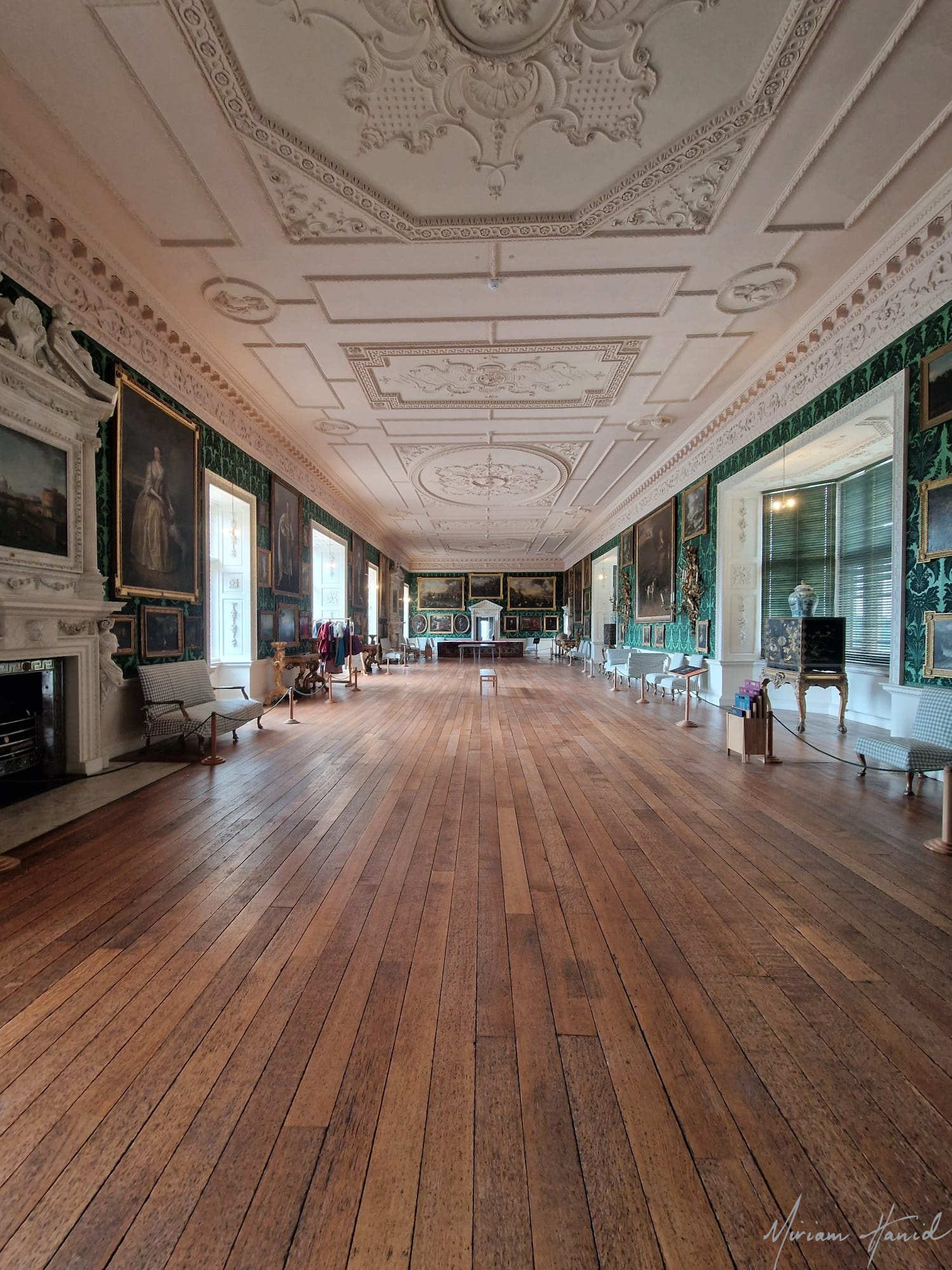
Inspired by Temple Newsam
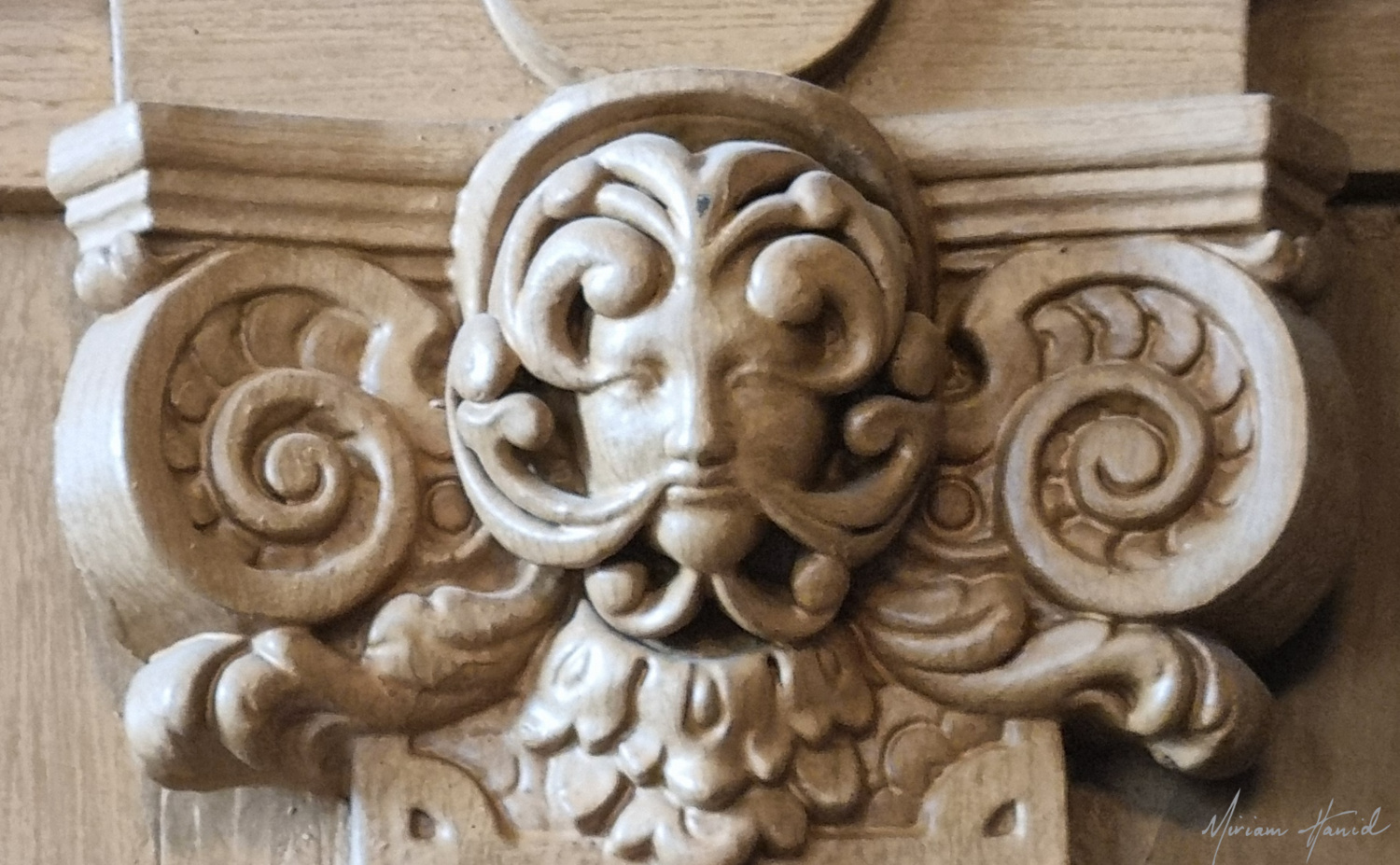
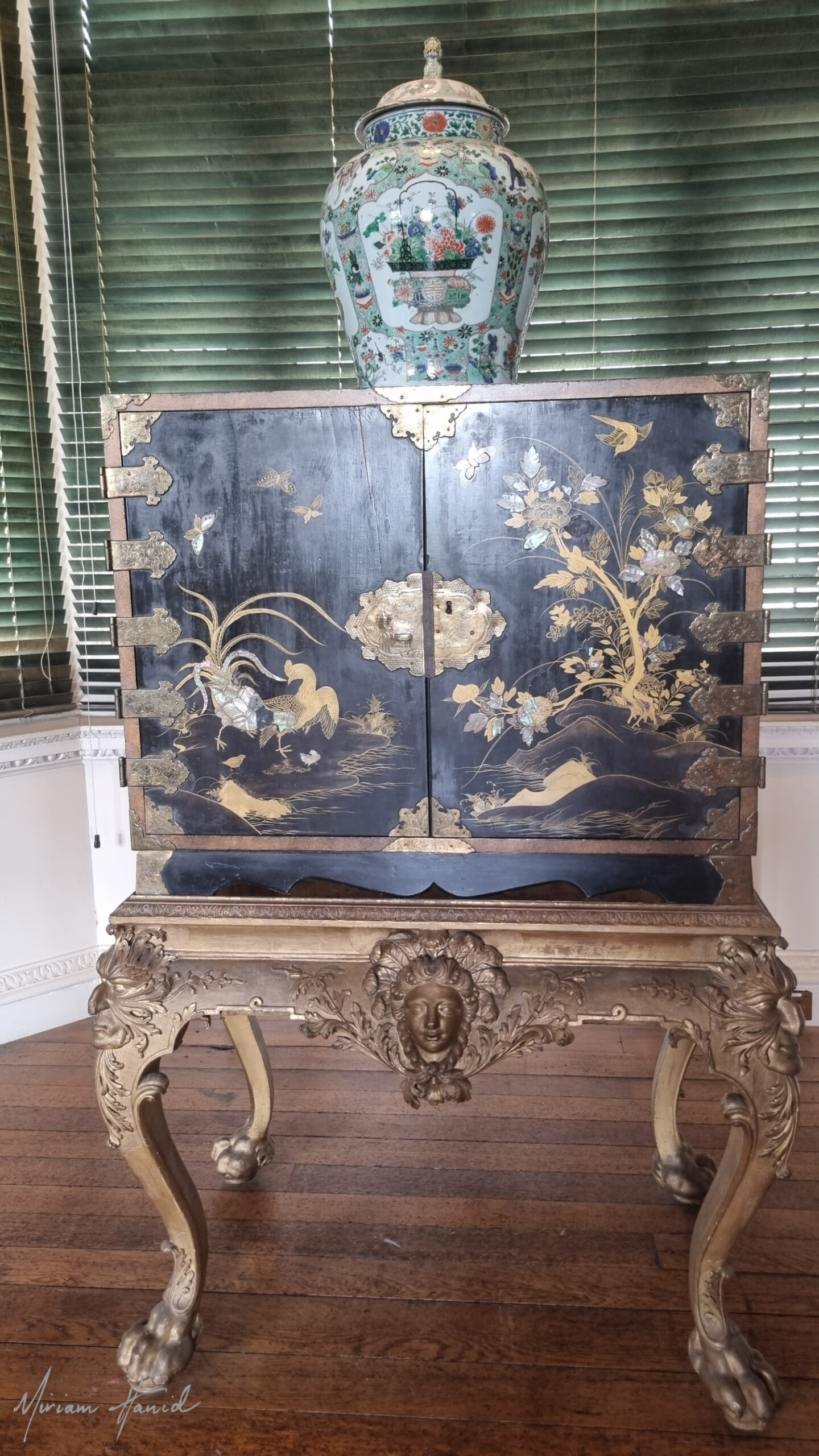
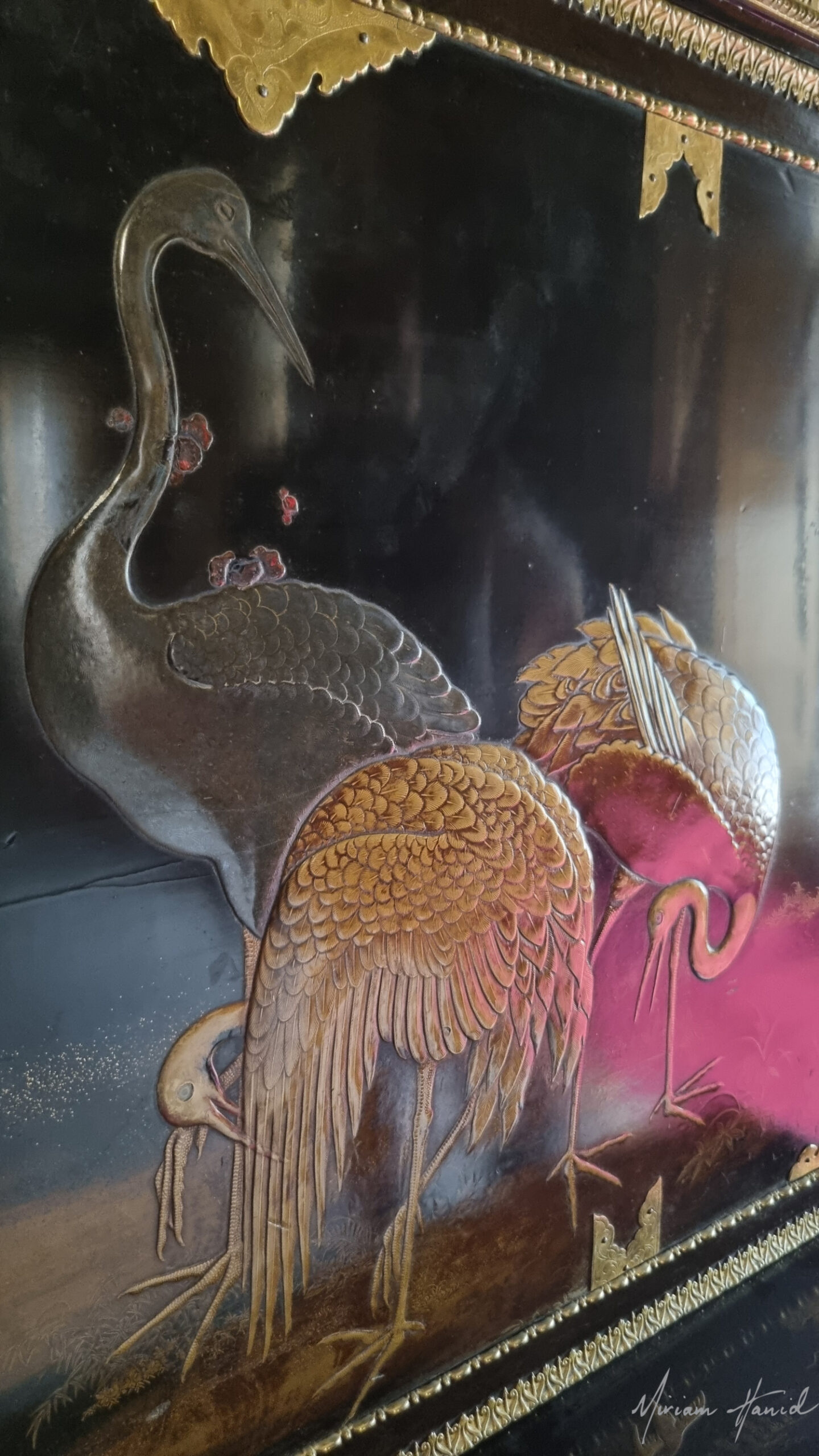
The house, previously known as Temple Newsham, is one of Britain’s finest heritage properties, and has grounds landscaped by Capability Brown. I last visited in 2017 and, seeking inspiration as I walked around this time, I was struck by the flow and movement within the bold carvings, largely to be seen in frames and furniture. The three-dimensional nature of the various motifs in wood sparked my interest, because they reminded me of the sculptural application of chasing and repoussé within the silver pieces that I create.
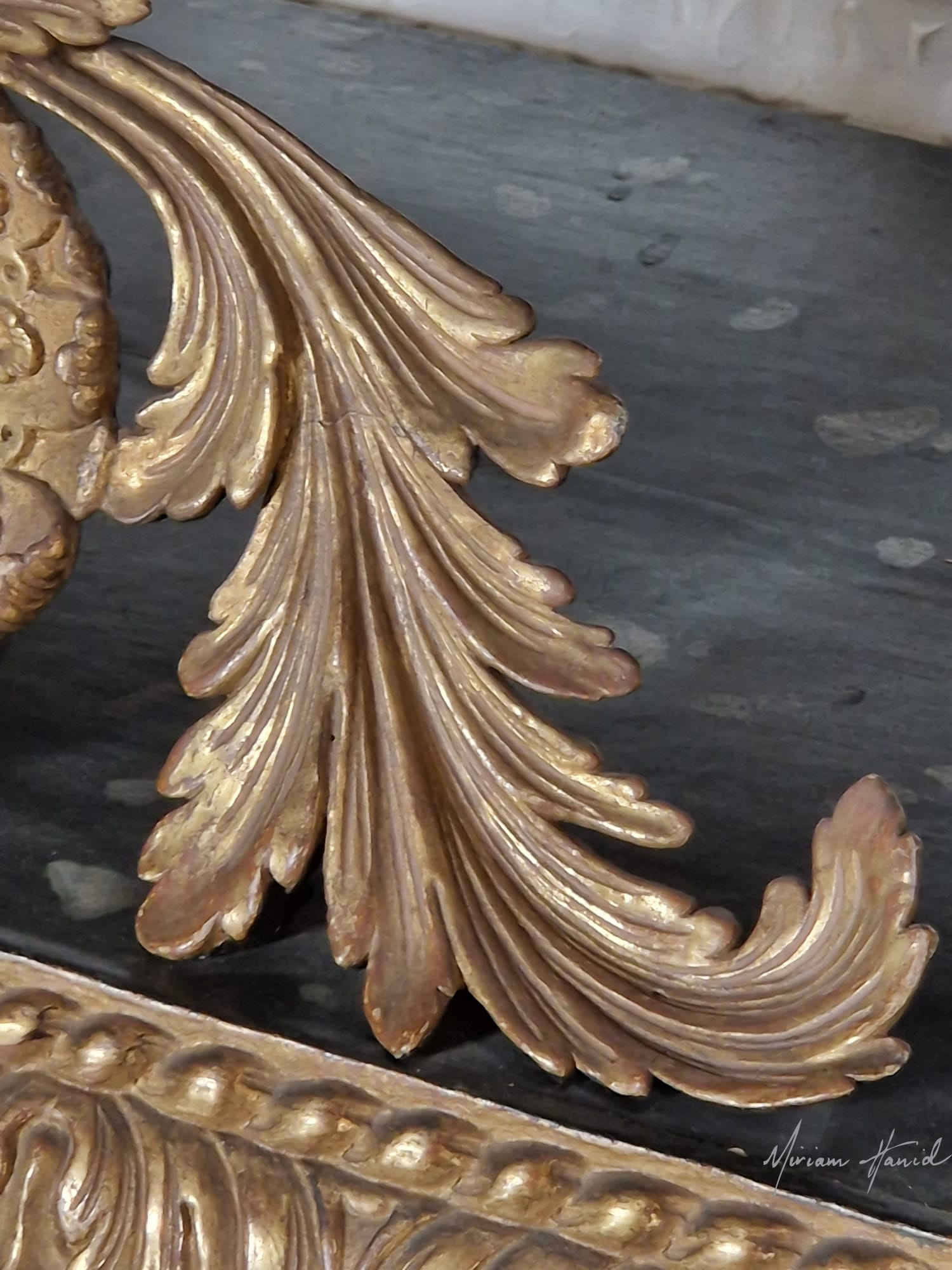
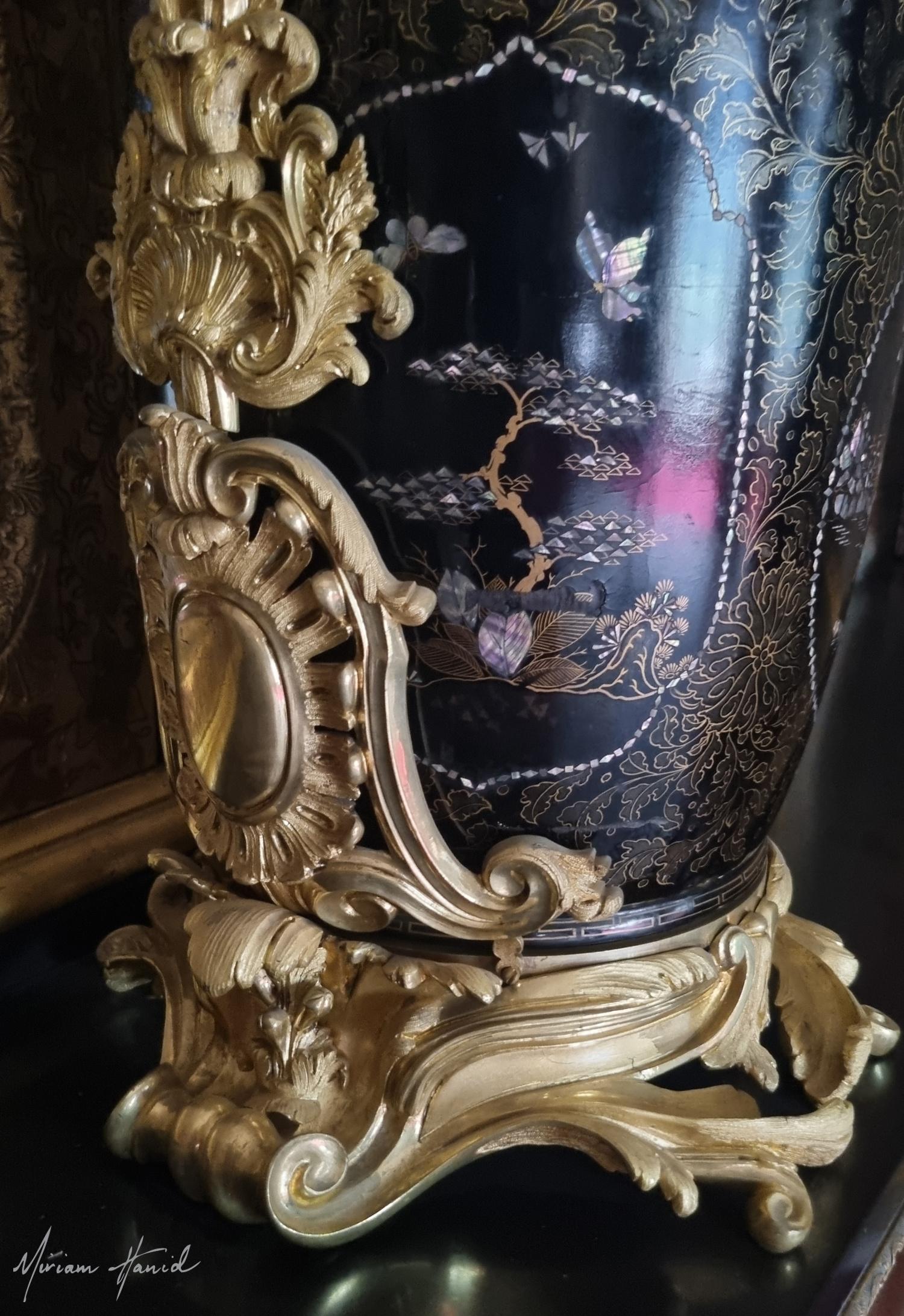
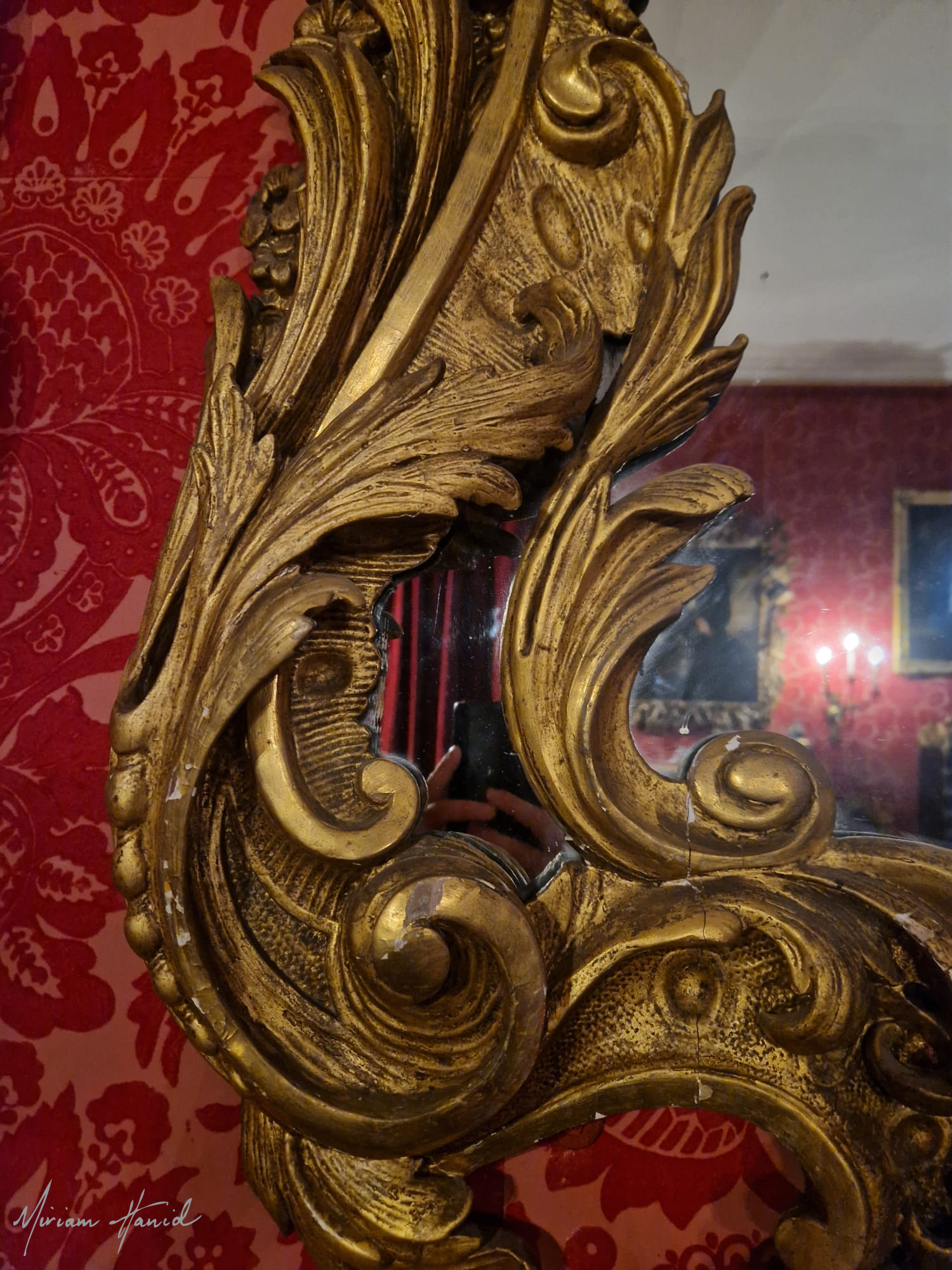
Many of the items that I singled out include bold acanthus foliage, and decorative scrollwork. They have an appealing dynamic and I wanted to capture that sense of motion and relief in my commission. Another element which sparked my interest was the notion of opposites, notably of symmetry and asymmetry. I had initially imagined a symmetrical piece with a feeling of movement within but, once I had started to sketch ideas out, as suspected, I soon found myself shifting the design off centre.
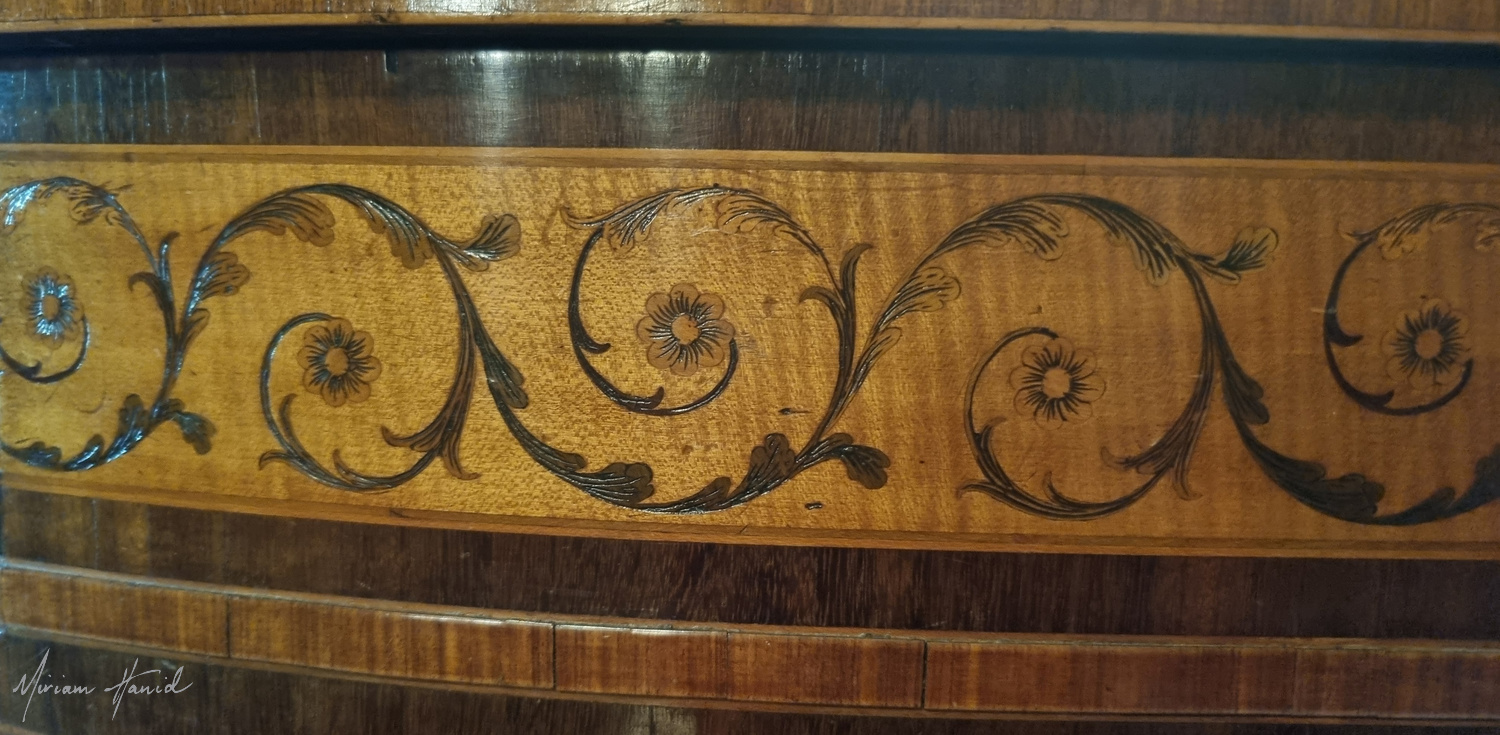
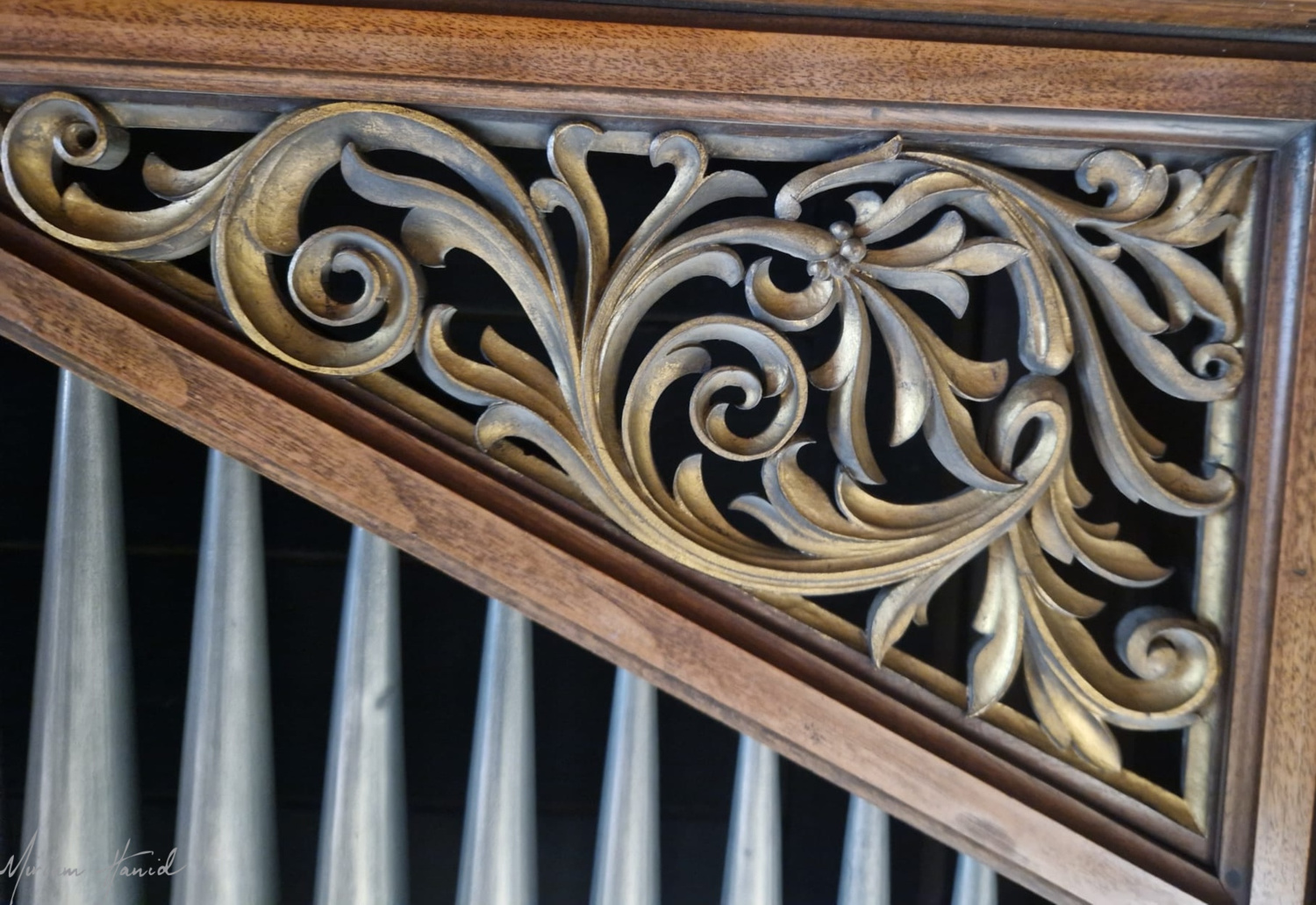

As a nod to majestic historic pieces of note within the collection, I embraced the idea of making a piece which wasn’t bound by function, but which would reference practicality, masquerading as a functional item while in fact being purely decorative and sculptural. Many of the heirloom pieces exhibit superb craftsmanship and concepts but were not in daily usage. The function of this new piece might reflect that more openly, being focussed solely on ‘exuding beauty’.
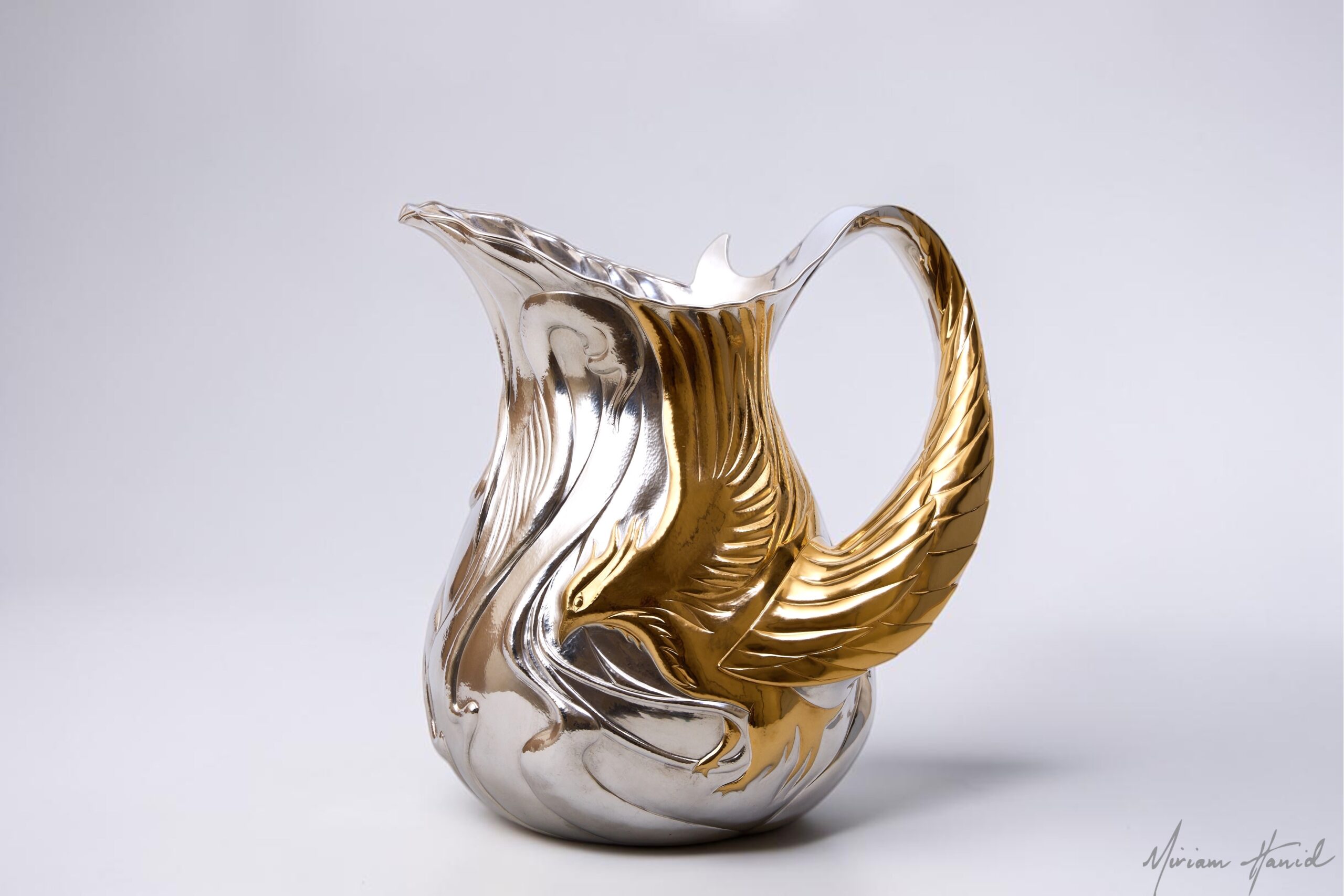
Further Inspiration for the Phoenix Jug
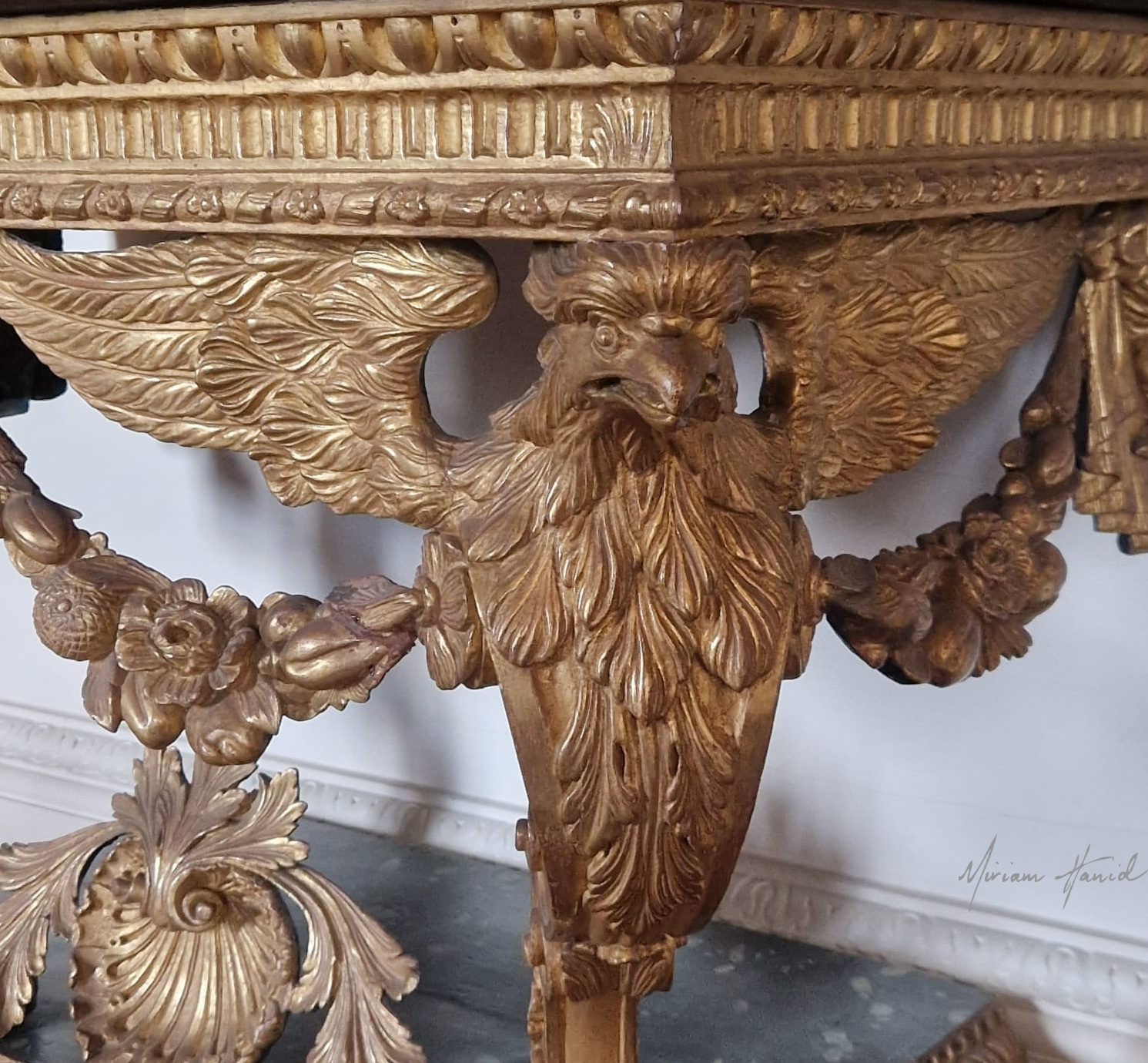
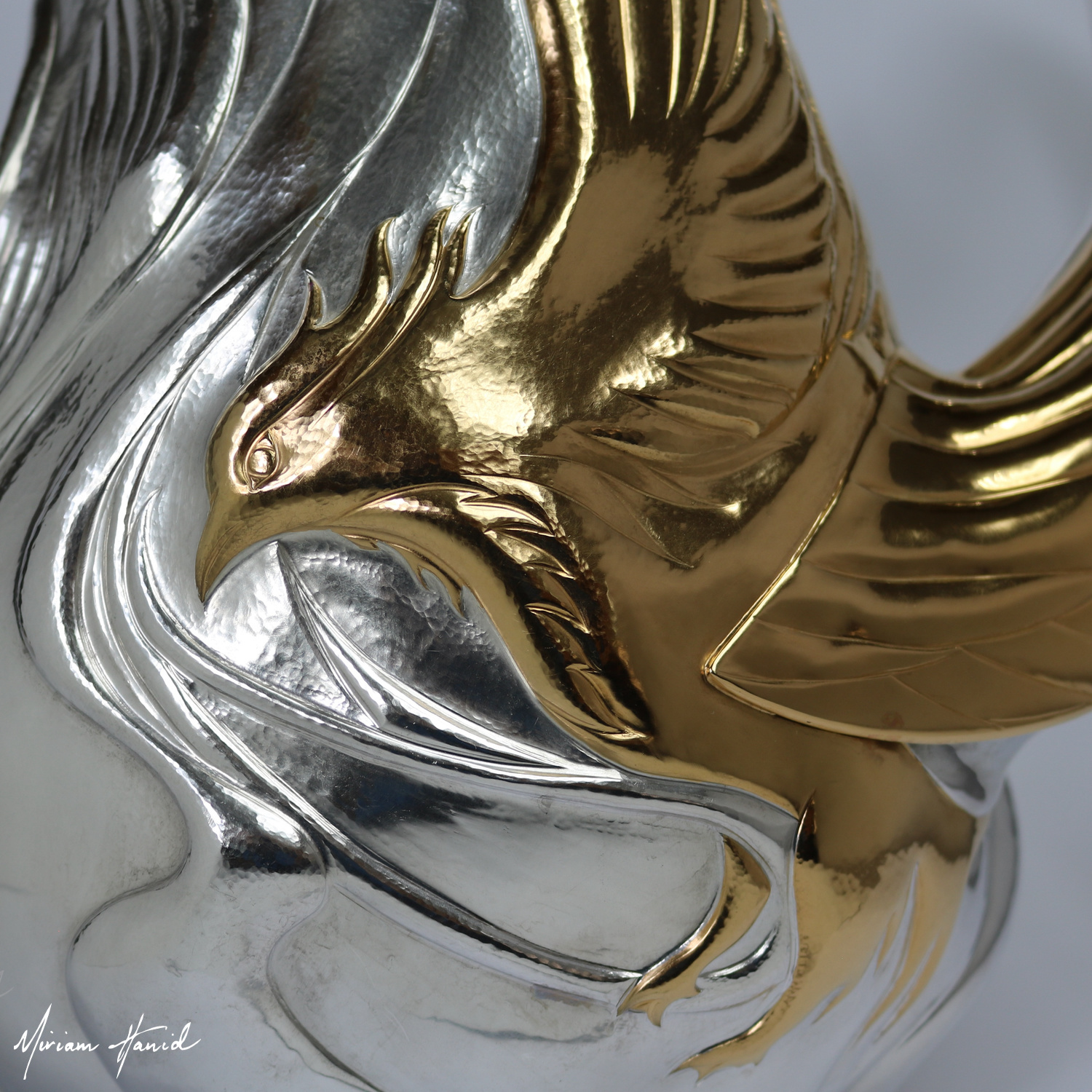
The tall sculptural vessel I envisioned is heavily influenced by the depictions of birds that abound in Temple Newsam House, in particular a stylised phoenix-like bird (an eagle as I now know) which adorns the corner of a table, a Japanese lacquer peacock and the additional flock of cut-out paper avians which Lady Hertford cleverly lifted from Audubon’s ‘Great Birds of America’ book and collaged, onto a hand-painted Chinese wallpaper design. Returning to my studio, an embossed screen and various wallpaper designs featuring birds and movement also popped out at me as I sifted through my source inspiration.
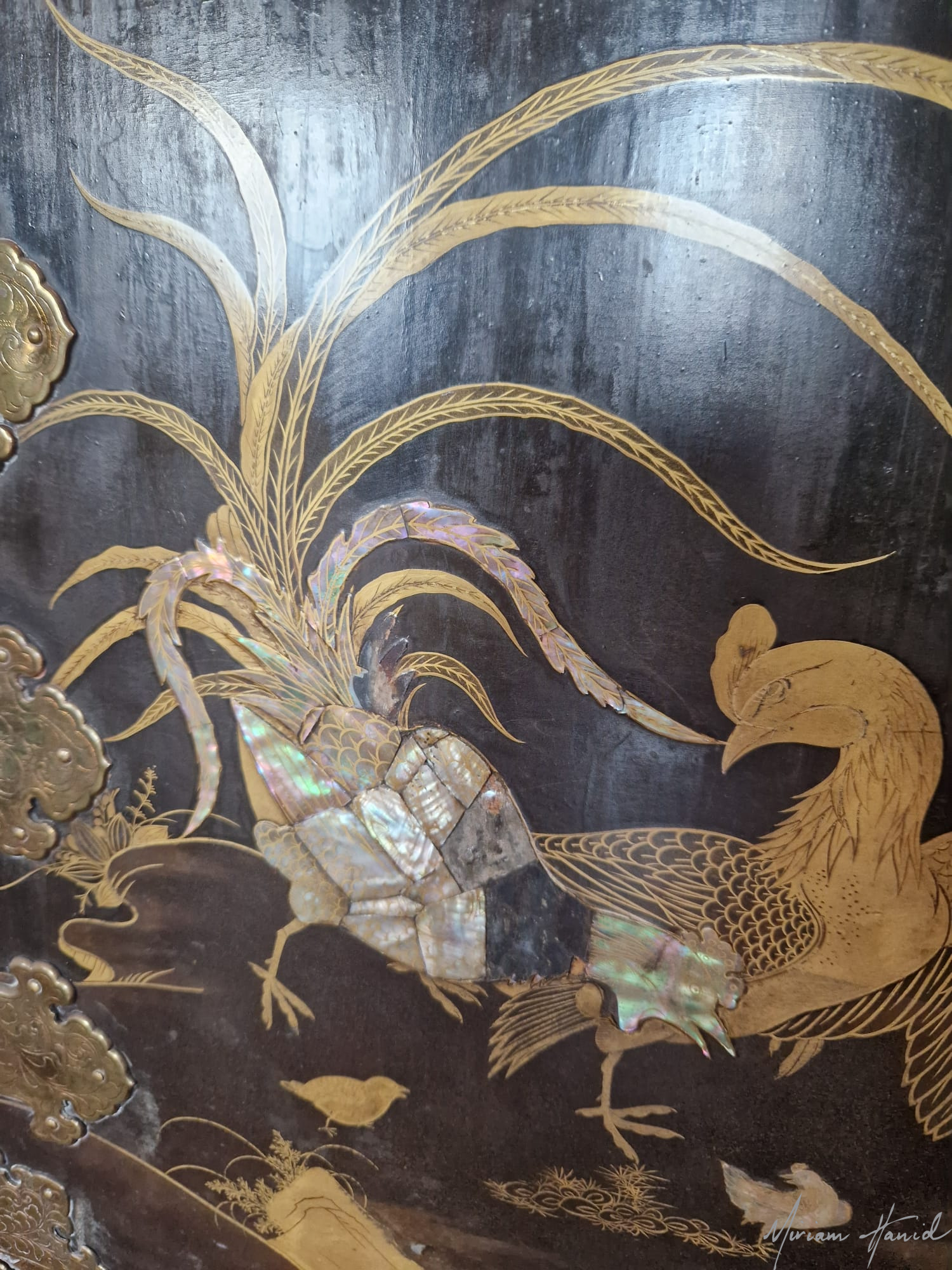
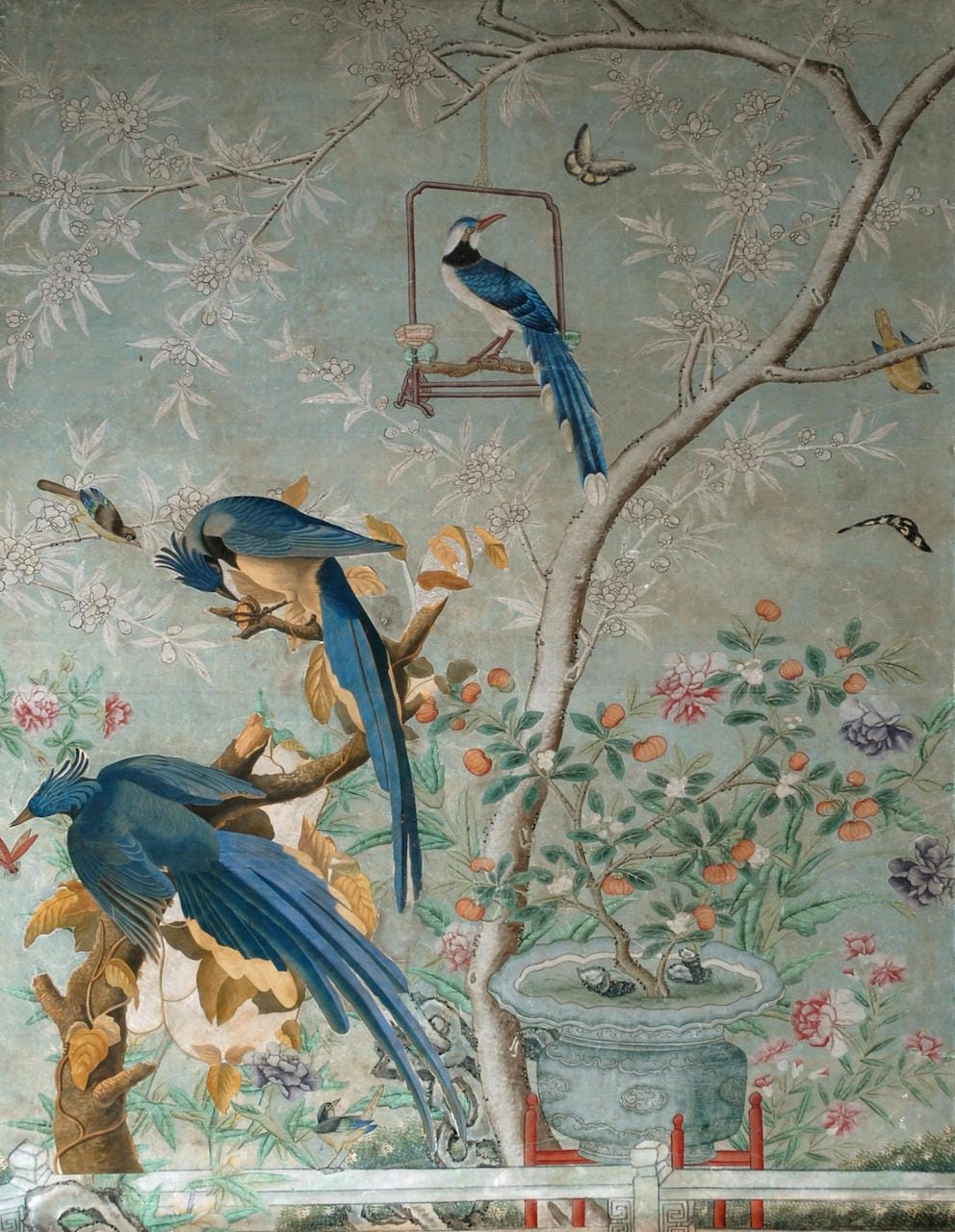
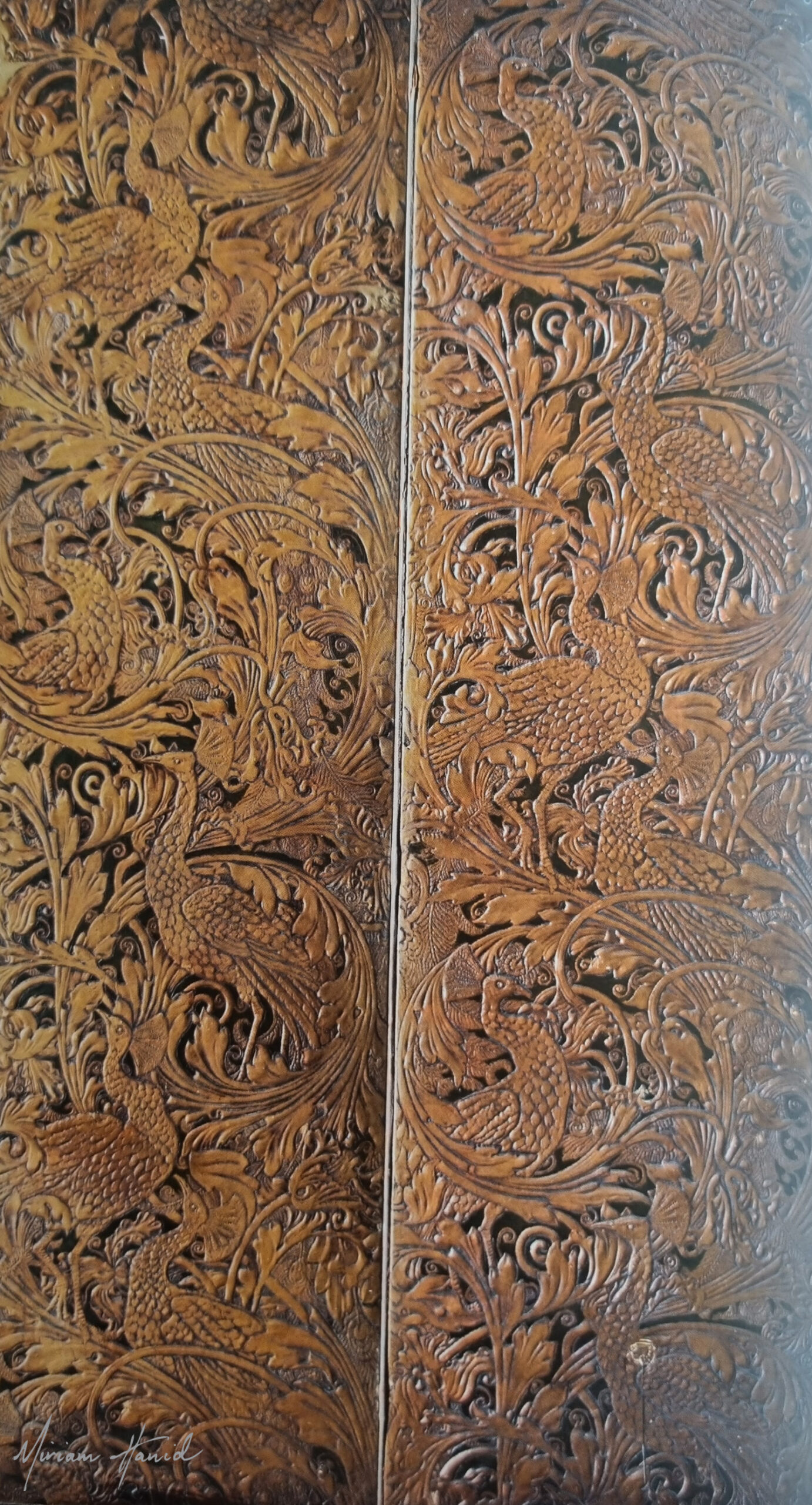
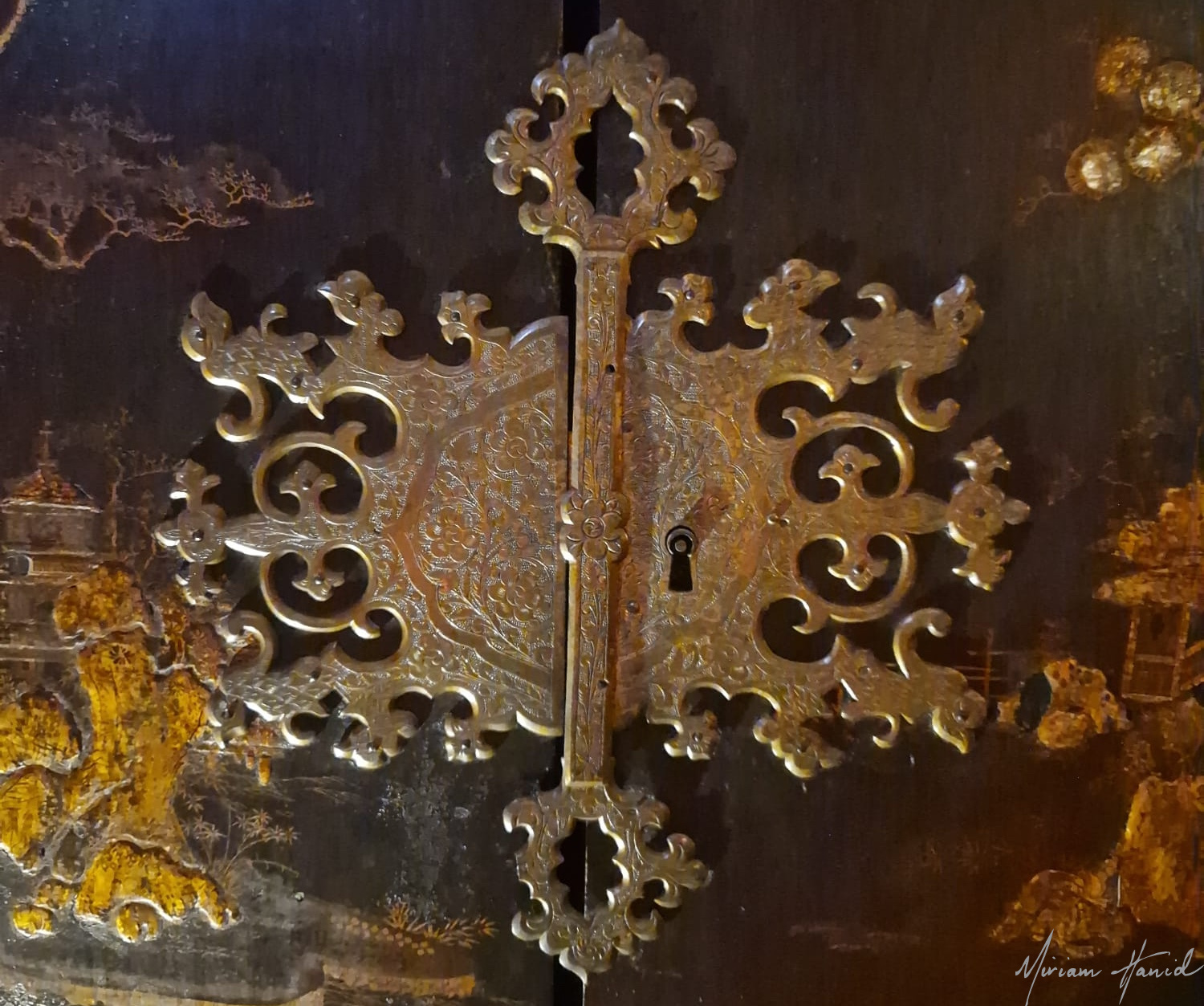

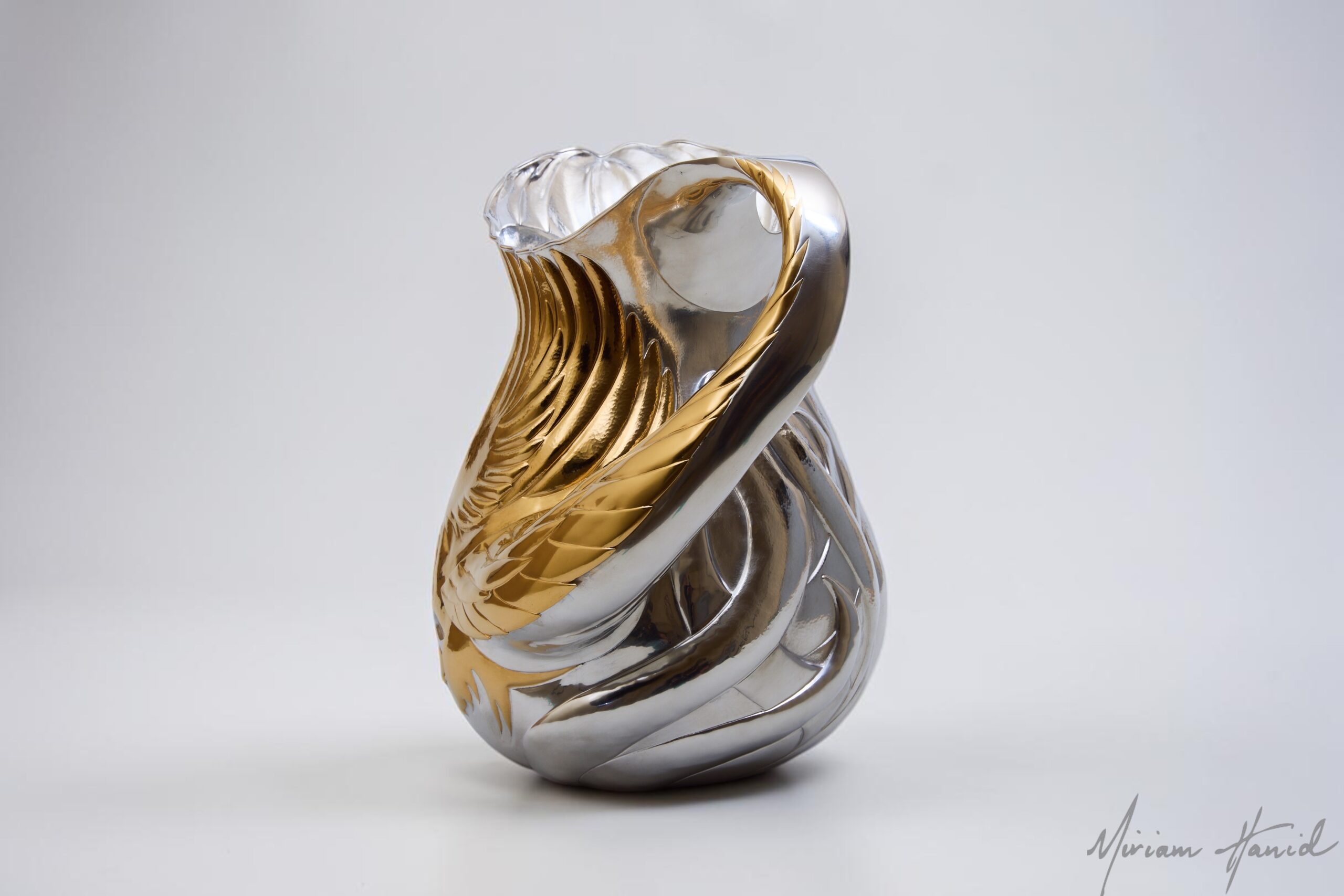
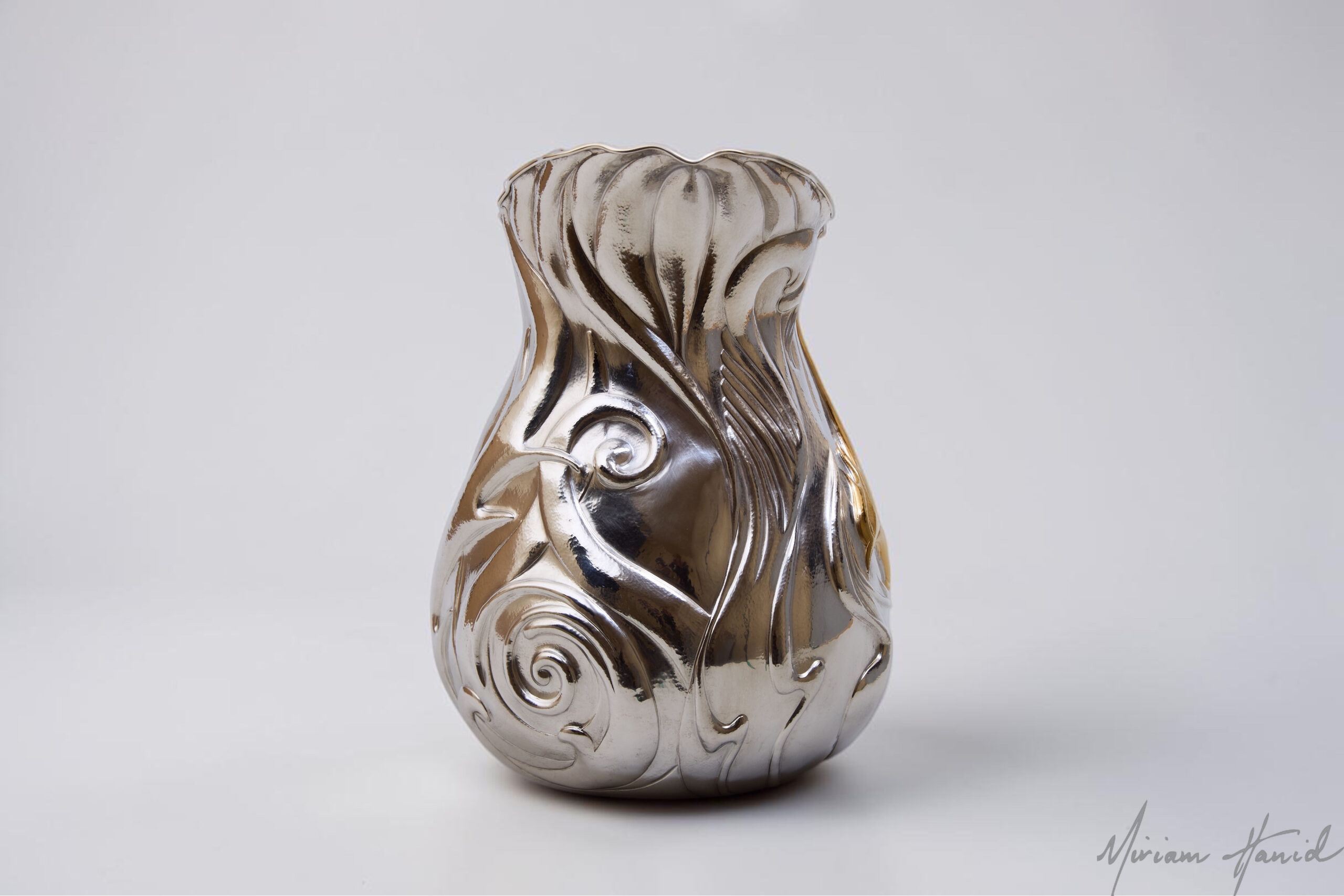
A similar dynamic is featured on the reverse of the jug which shows sculptural flames, morphing into acanthus scrolls and other motifs taken from within Temple Newsam House. The flames emanating from the base are chased boldly on the vessel, dispersing within the surrounding space, blending into the emptiness, all symbolising combustion.
Images: Leeds Museums and Galleries – Nick Singleton
The Immortal Phoenix
One of the most legendary mythological birds of all time, finding its roots in Ancient Egypt as the Bennu Bird, the majestic Phoenix symbolises life, death and rebirth, resilience and immortality. This awe-inspiring avian’s mythology had a powerful influence on my design – honouring creation, the undying spirit, and the power of transformation. Turning back to Temple Newsam’s heirloom collections, I wanted to reference this sense of renewal and the eternal cycle of life, linking past, present and future.
The Phoenix appears once every 500 years, builds a pyre of aromatic herbs and spices, and immolates itself in a grand act of self-destruction. The Phoenix is closely related to the Egyptian Sun-God, Ra, to whose temple the reborn bird takes the ashes of its parent, honouring the act of creation.
The theme of the phoenix and transformation is particularly pertinent for me since becoming a mother in 2022. I feel as if I too am continuing the cycle of life, evolving from my former self into a new being that increasingly seeks to honour the traditions of my ancestors, and pass those on to my daughter, as she grows older.
Collaborative Creativity
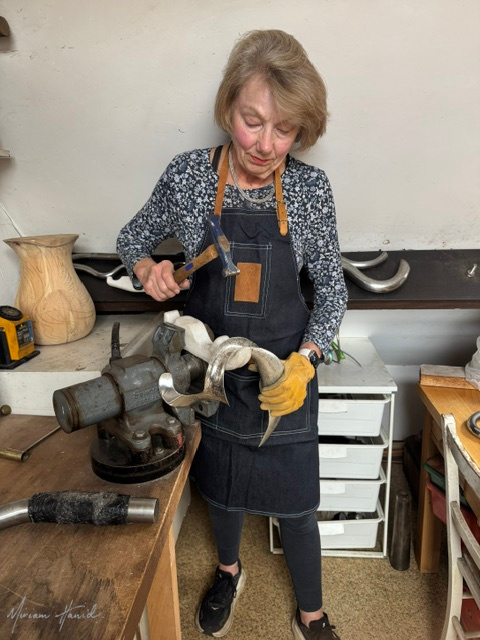
Having worked with silversmith Jenny Edge on my Loving Cup for the Clothworkers’ Company, we collaborated again to further develop the aesthetic of a sculptural anticlastic-formed handle, this time creating a flow into a feathered wing that extends from the phoenix and blends with the flames.
Jenny brought my initial idea for the handle to life with her anticlastic forming expertise, which seamlessly blended the hollow handle with the top of the jug. Not an easy task, it is a design feature which I have used previously in my ‘Cascade Jug’, although that was made using a different methodology.

“Working on the handle for the Phoenix Jug with Miriam was fun and a challenge. The handle was to be hollow, made from sheet metal and we decided an asymmetric shape would be best. The challenge was to work out a pattern such that the handle flowed from the top of the jug and curved round to attach onto the side of the jug, thereby becoming part of the phoenix. The technique of anticlastic raising was ideal for forming such a shape.
Traditional raising of a bowl is synclastic raising where the principal curves go in the same direction. However, in anticlastic raising the curves go in opposite directions forming at first a shape similar to a horse saddle, a shape which does not hold water but allows the creation of interesting organic forms. This is the technique I use in my work, my pieces being sculptural in nature.
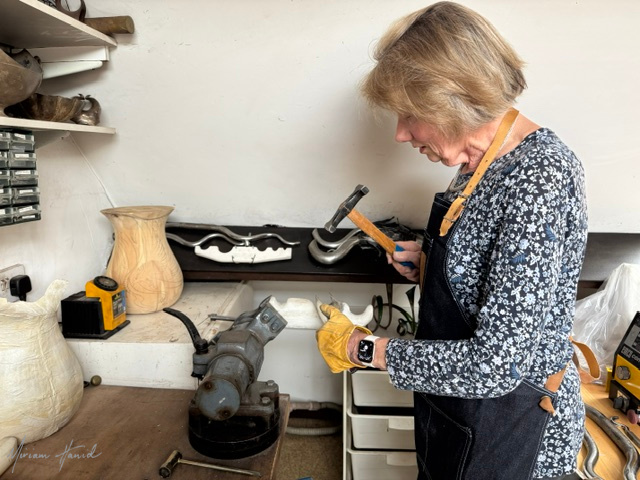
Although anticlastic raising has been used to form the inside curves of hollow handles for hundreds of years it was Heikki Zeppä who brought the technique to the modern silversmith by introducing the use of either plastic hammers on metal sinusoidal stakes or metal hammers on plastic stakes. With these specially designed stakes an infinite range of curves can be formed.
In my work I like to contrast the inside and outside of curves, either with gold plating, partition or colour, from transparent enamel over engraving.
Working on the Phoenix Jug with Miriam was an exciting project. The chased phoenix design gave another dimension to the project, and the handle could be designed such that the anticlastic flow and the chasing helped to make the handle an integral part of the jug.
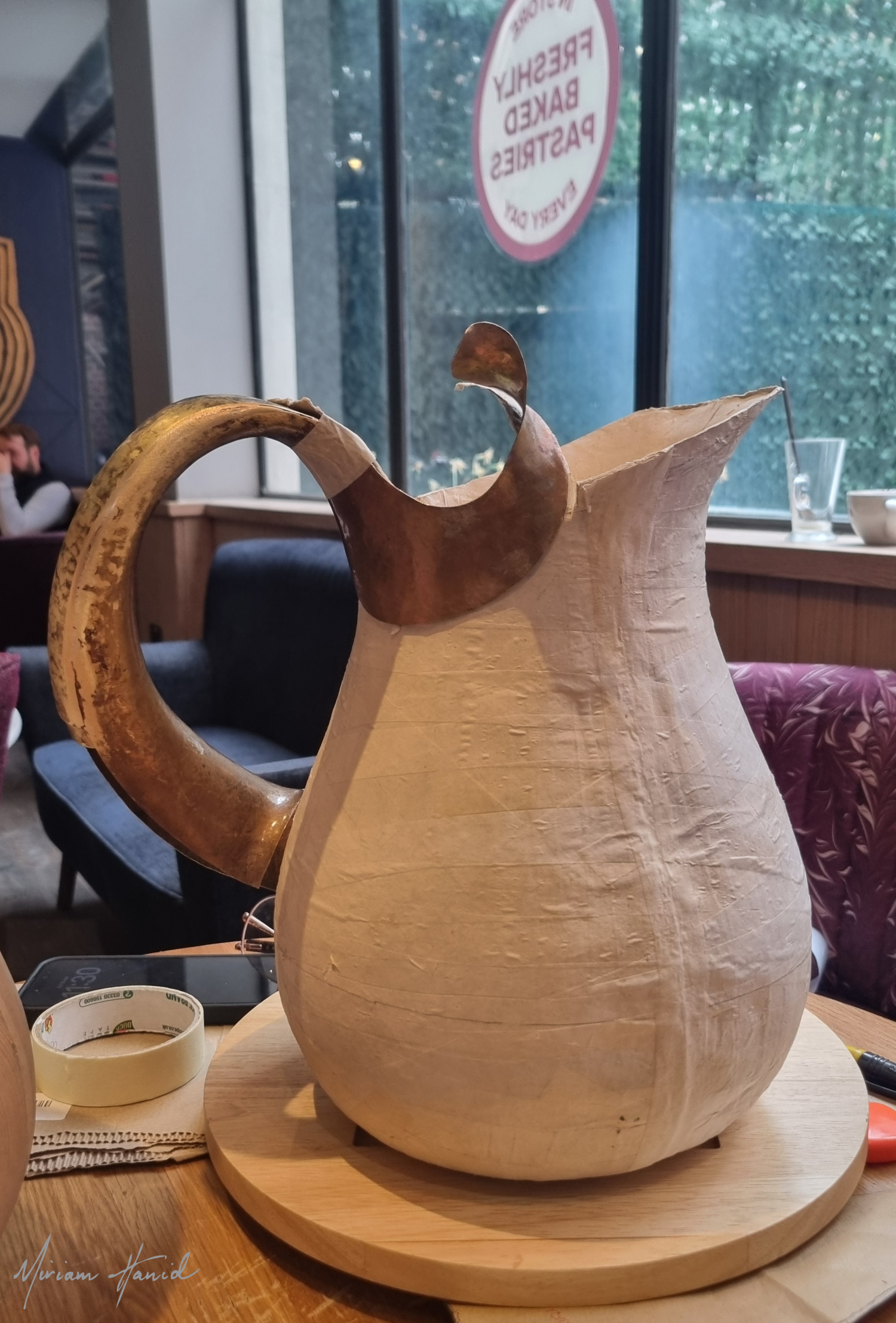
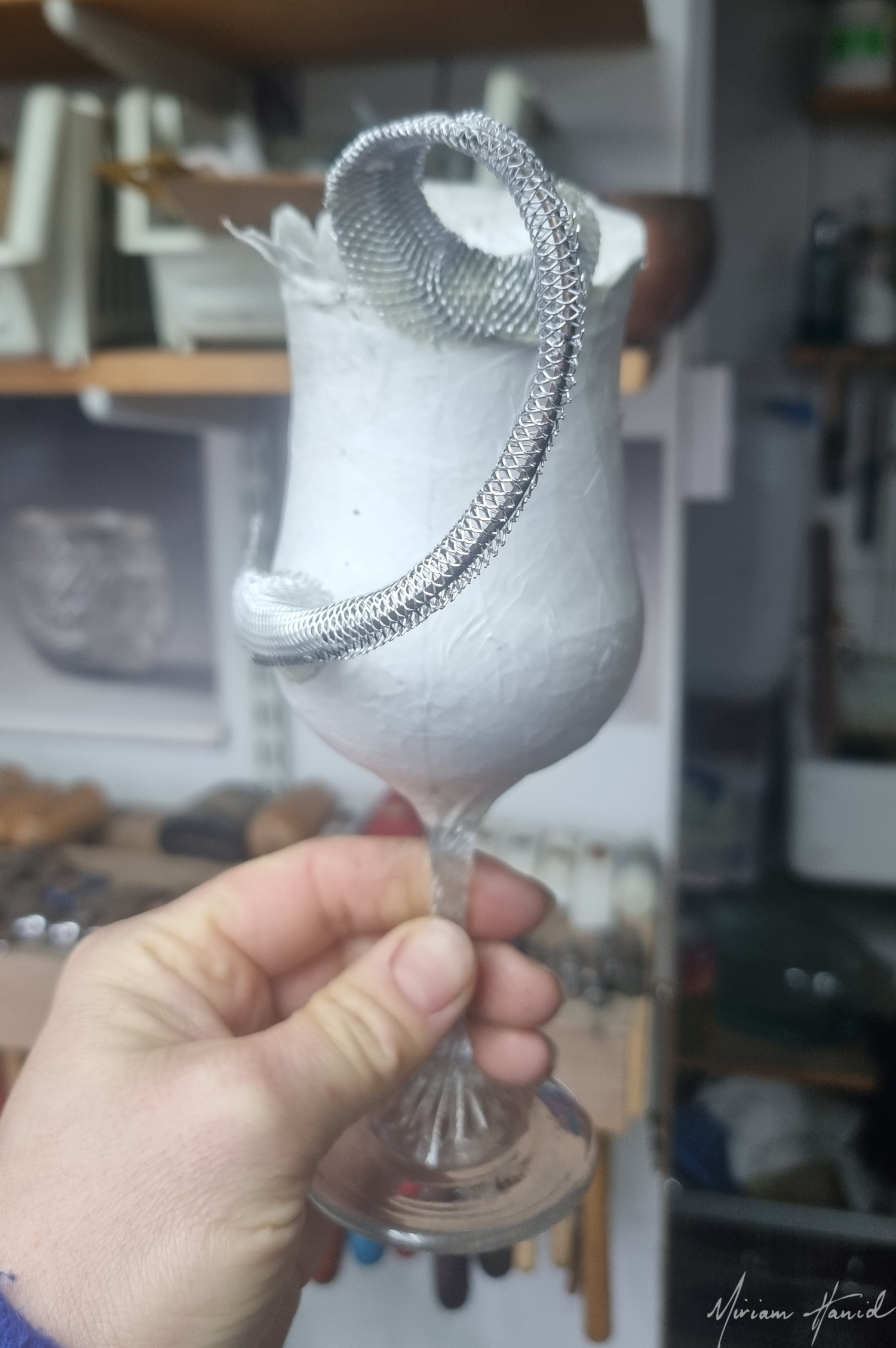
For my part I first made a papier maché model of the jug so I could decide where the top of the jug should be cut down and flow into the handle. The challenge was to work out the pattern for the handle to give the appropriate curves and fit. I worked with mesh and brass prototypes making the anticlastic, asymmetric inner part of the handle until a good shape was achieved. Then with this pattern the handle was formed in silver using my range of anticlastic stakes.
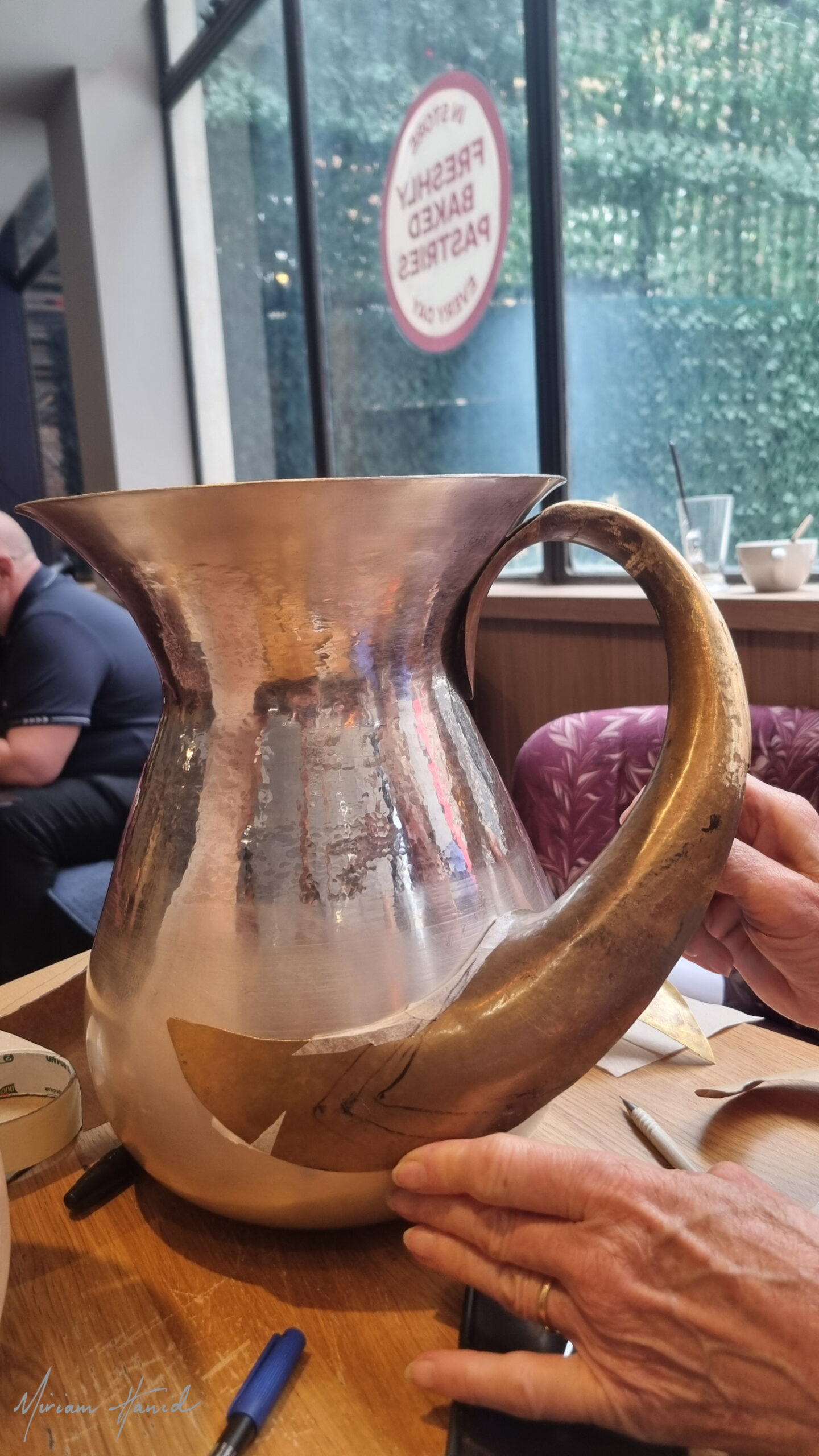

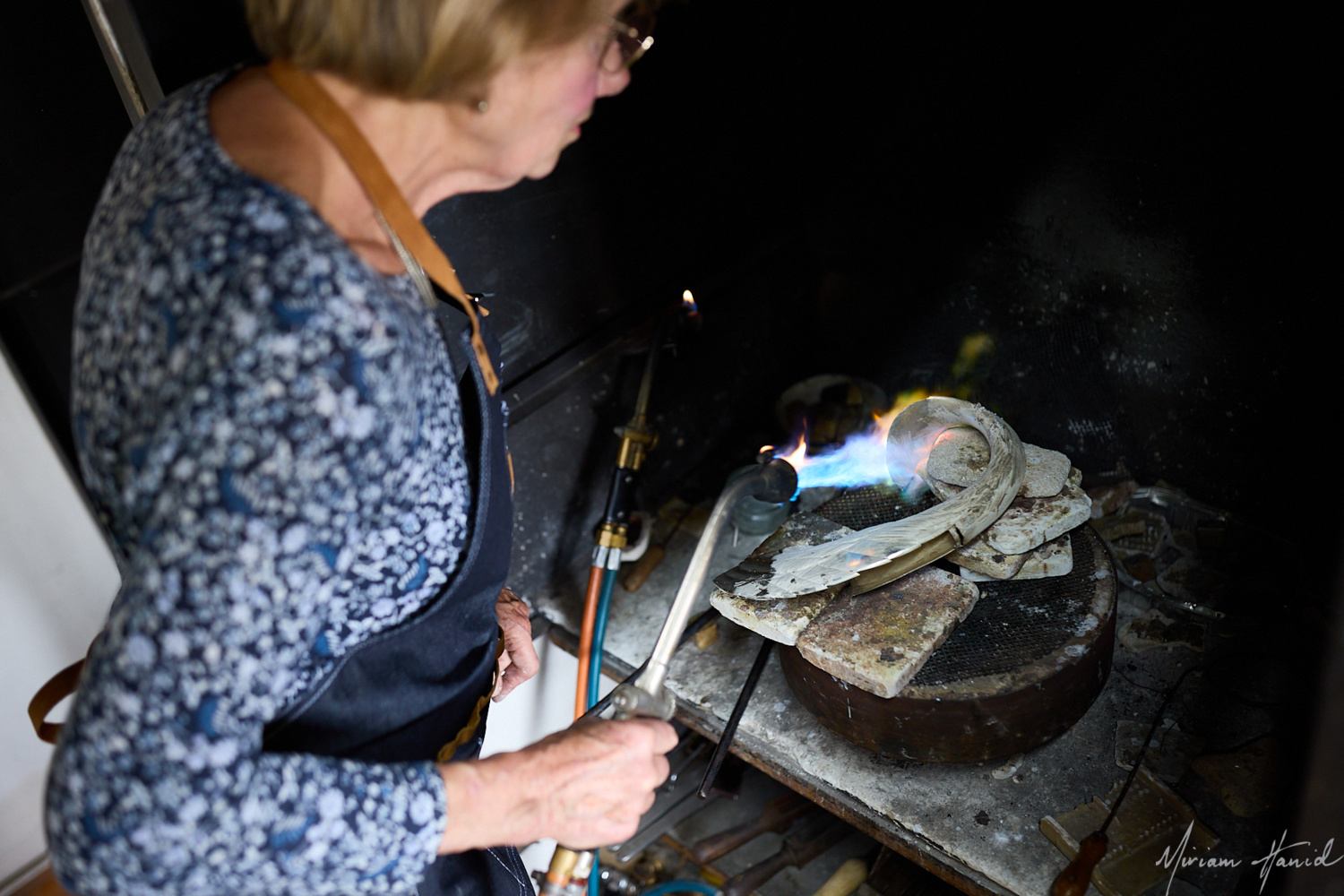
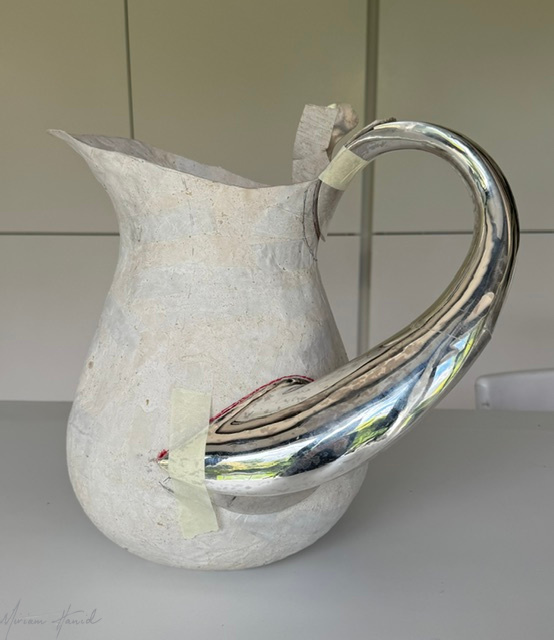
The next step was to make the decking and the top part applied to the back of the handle, the lower part being made also but applied later so that Miriam could at this stage fill the handle with pitch for chasing and repoussé.
We then, together, attached the handle onto the jug by soldering, followed by applying the lower decking piece and finished it off. Miriam could then complete the chasing around the join.” (Jenny Edge)


The Completion: Personal Insights
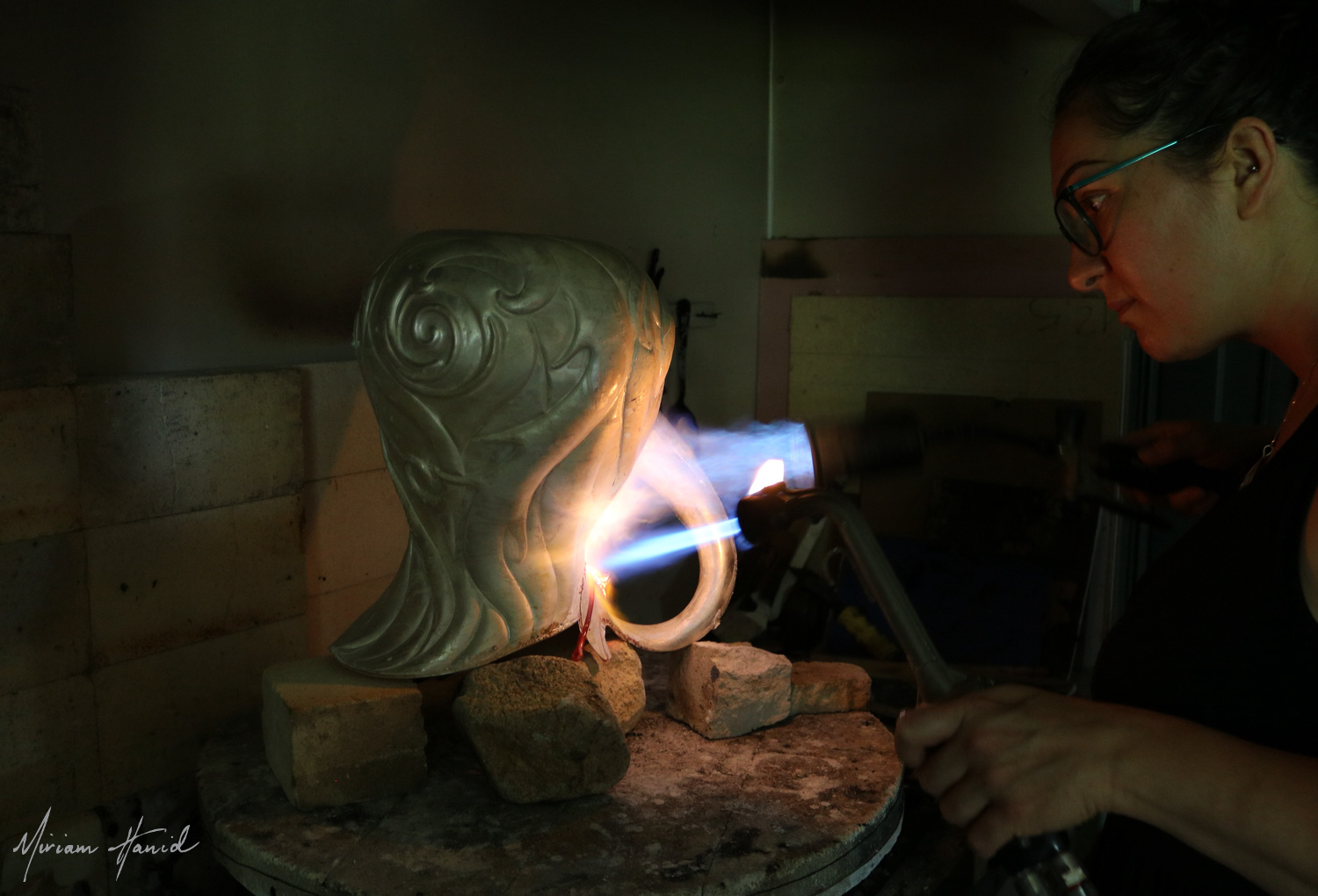
Even in the face of destruction and loss, newfound energy can arise from our hearts. When all seems hopeless, something new, something surprising, something of beauty, can burst forth from the precious egg buried beneath the ashes – it is up to us to dig until we find it.
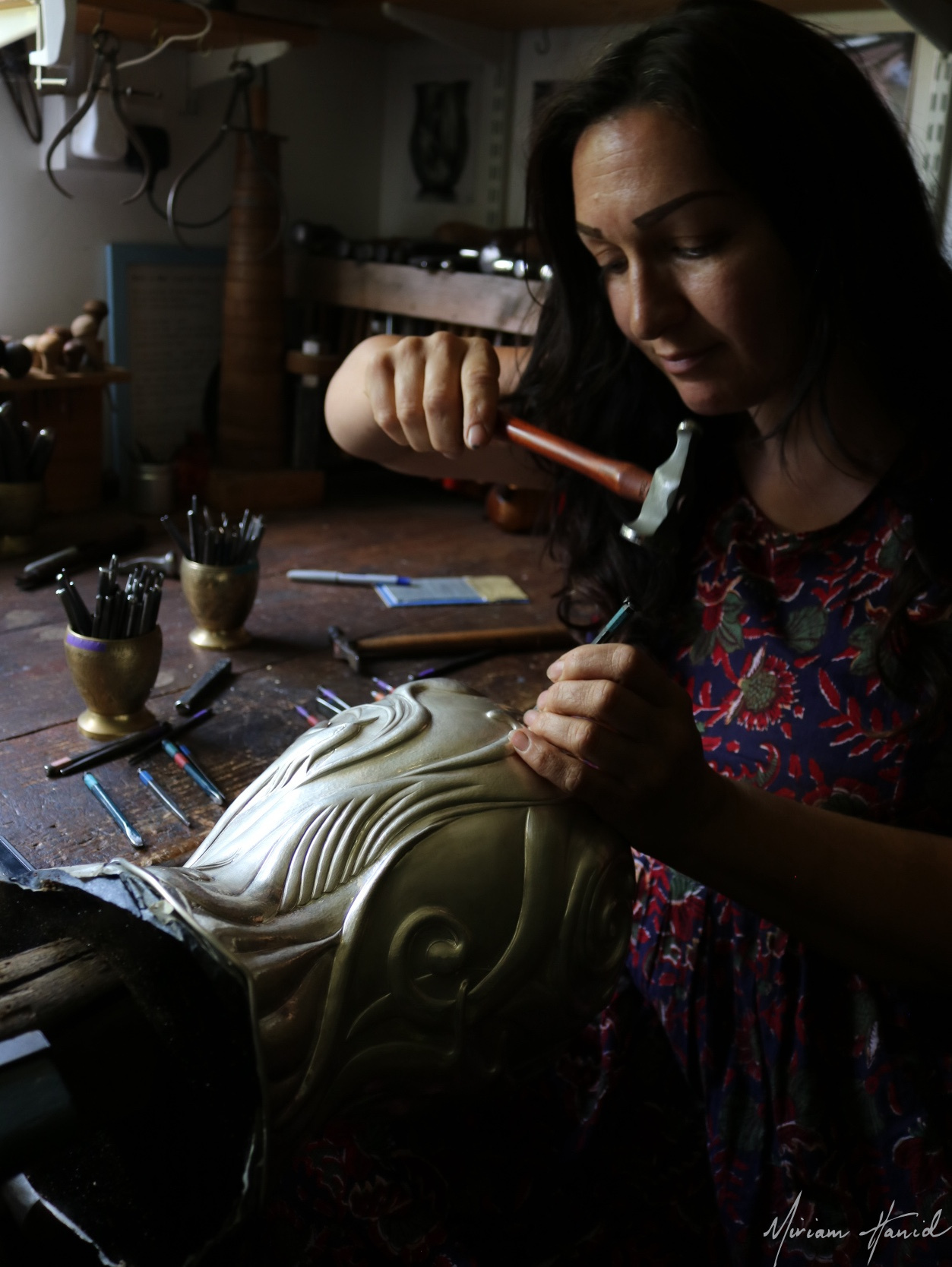
I carried this sentiment with me while creating the Phoenix Jug, and it was somewhat a lived experience too. Thousands of hammer blows were painstakingly delivered by my hands – full days, late nights. The physical body tired, but the vision stayed strong. The silver was tested to its limits, determination fuelling the fire. This piece was also a collaboration, powered by community and connection – people all around me supported with a generous fount of energy, full of empathy and love, as it was formed.”
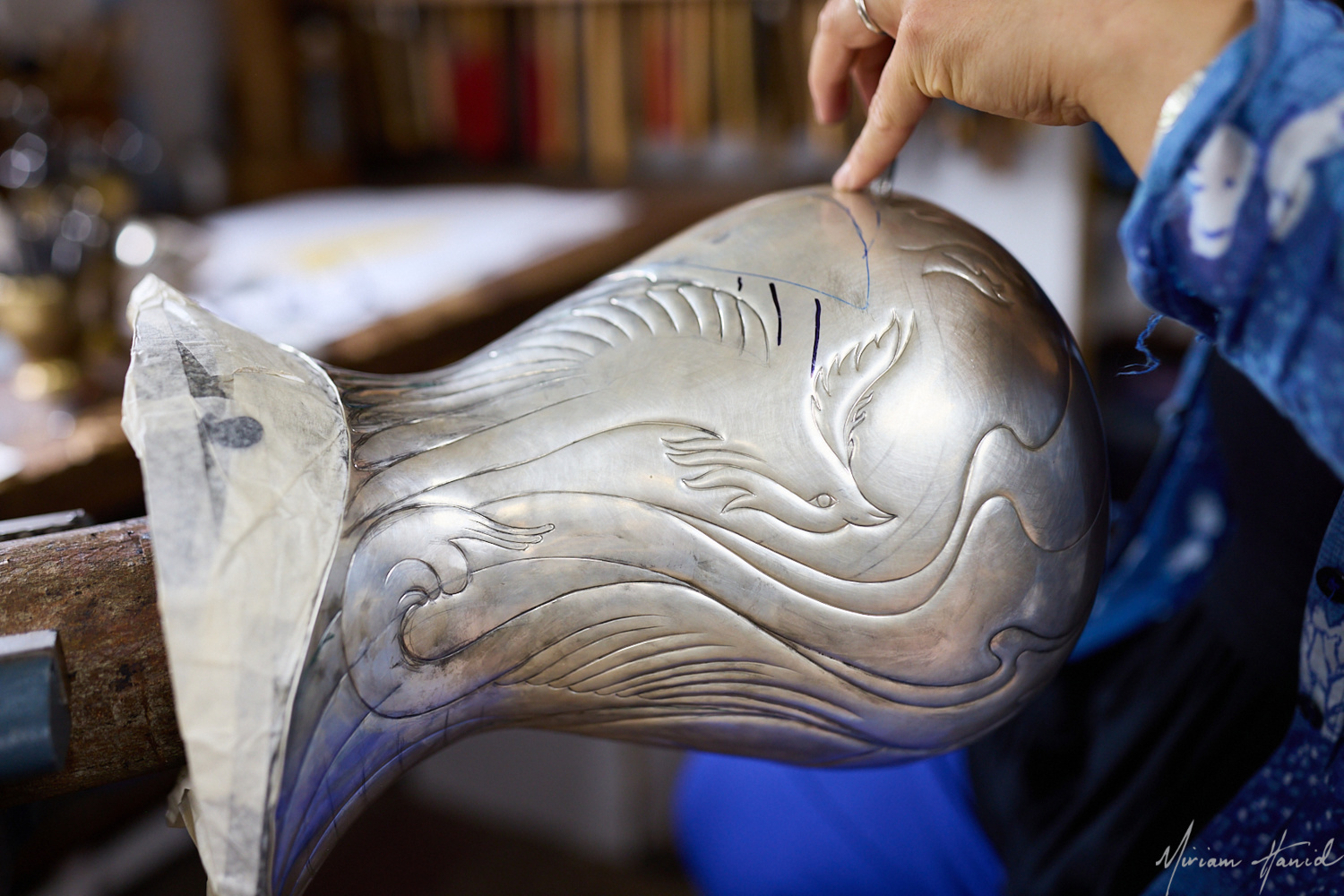
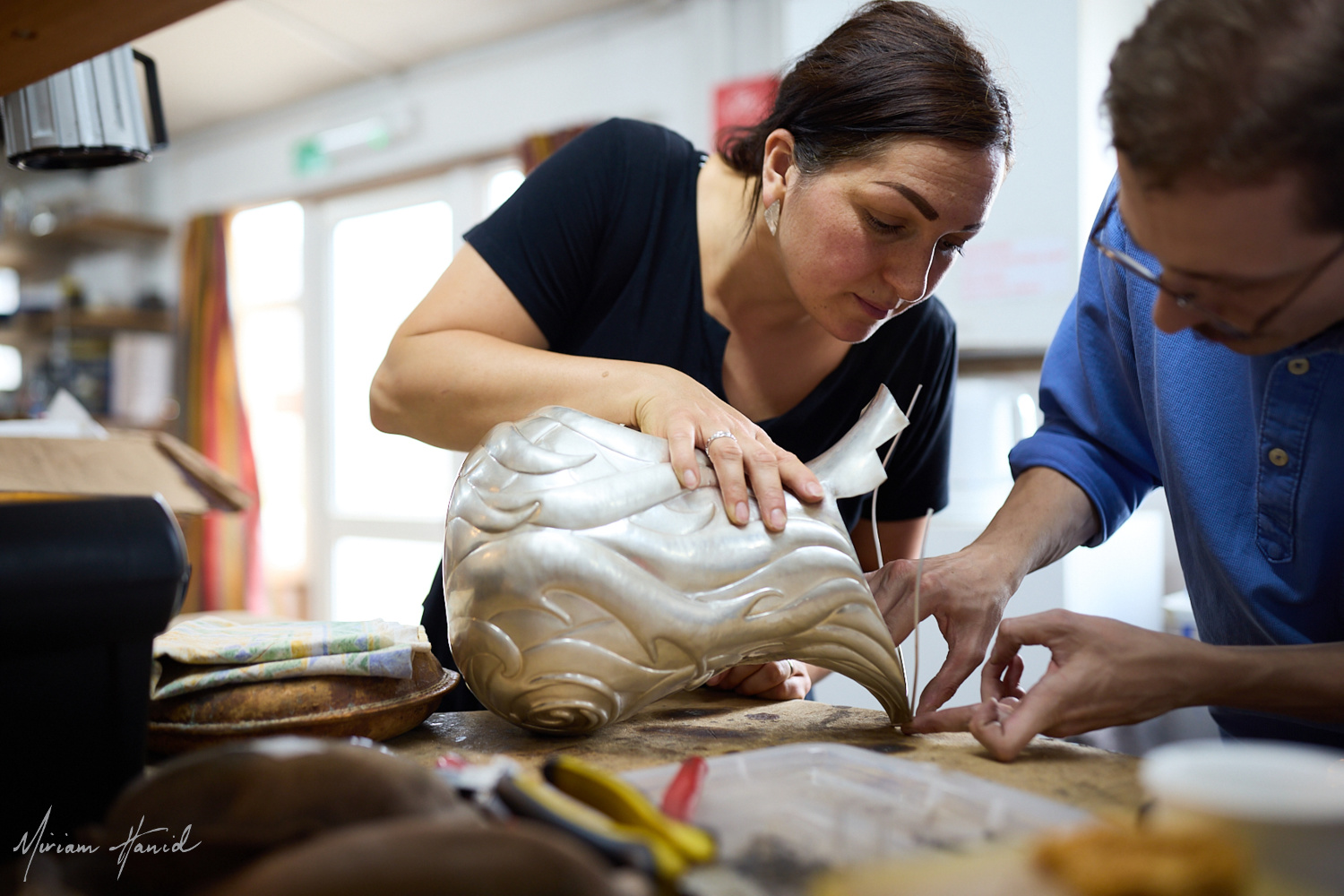

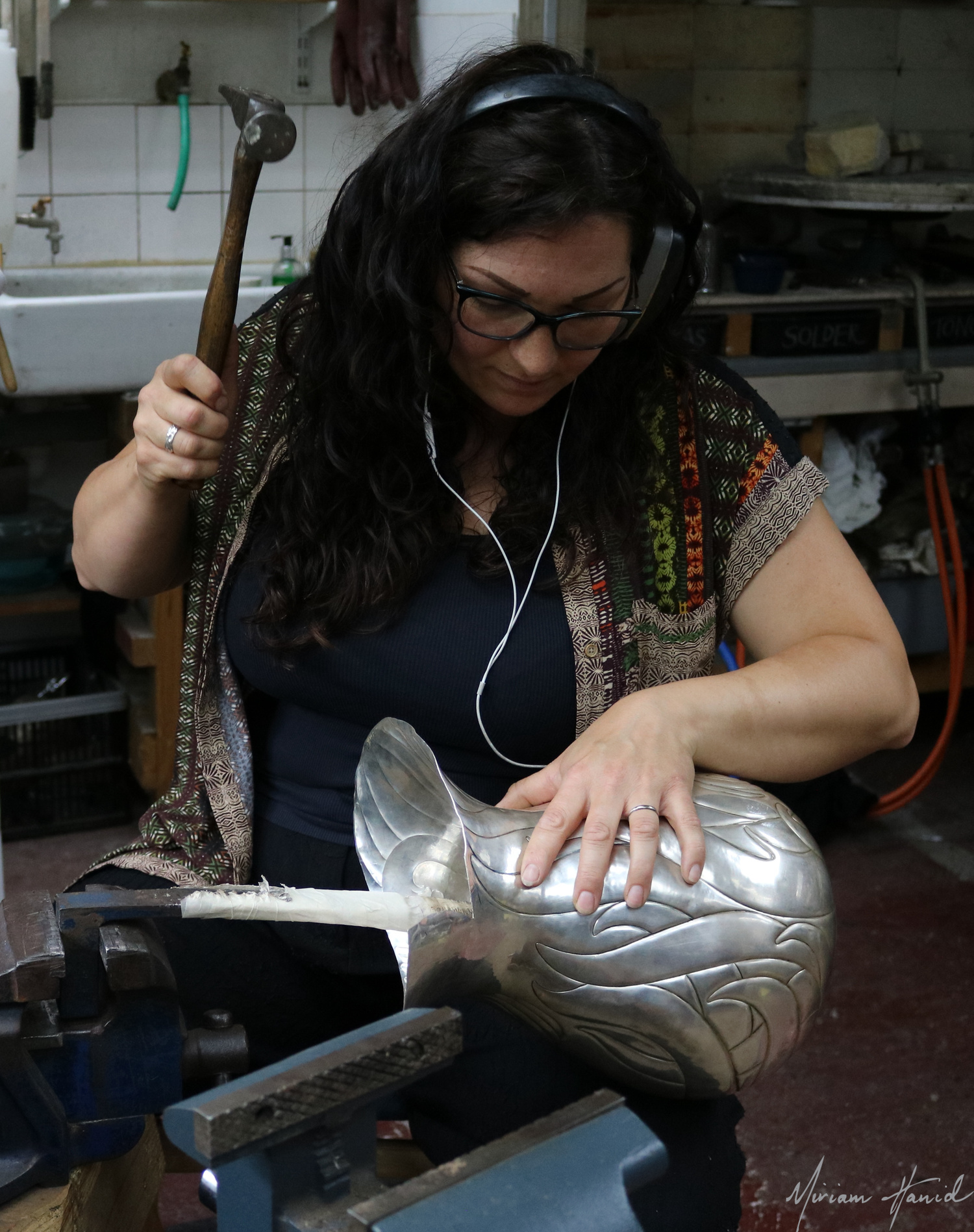
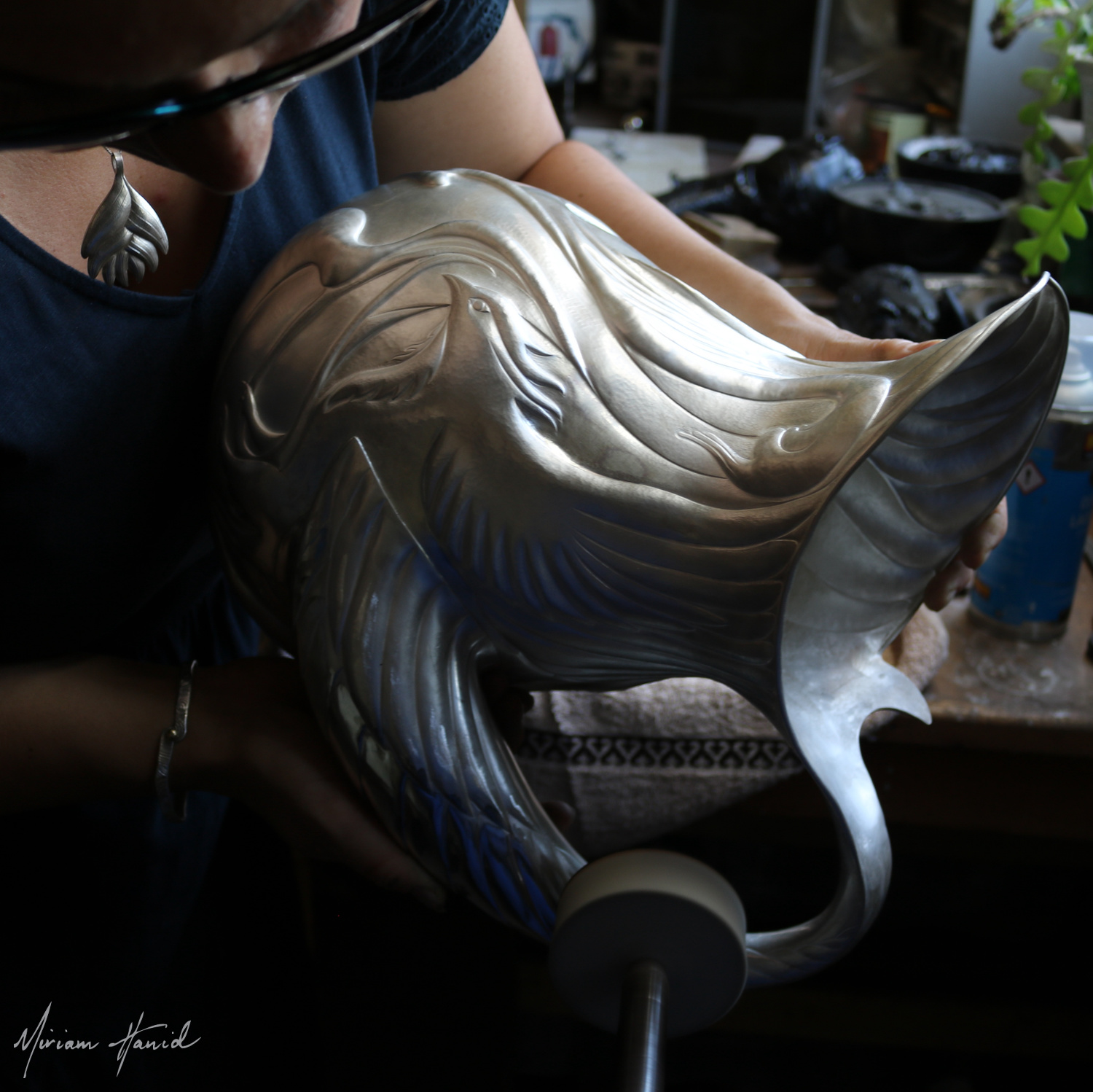
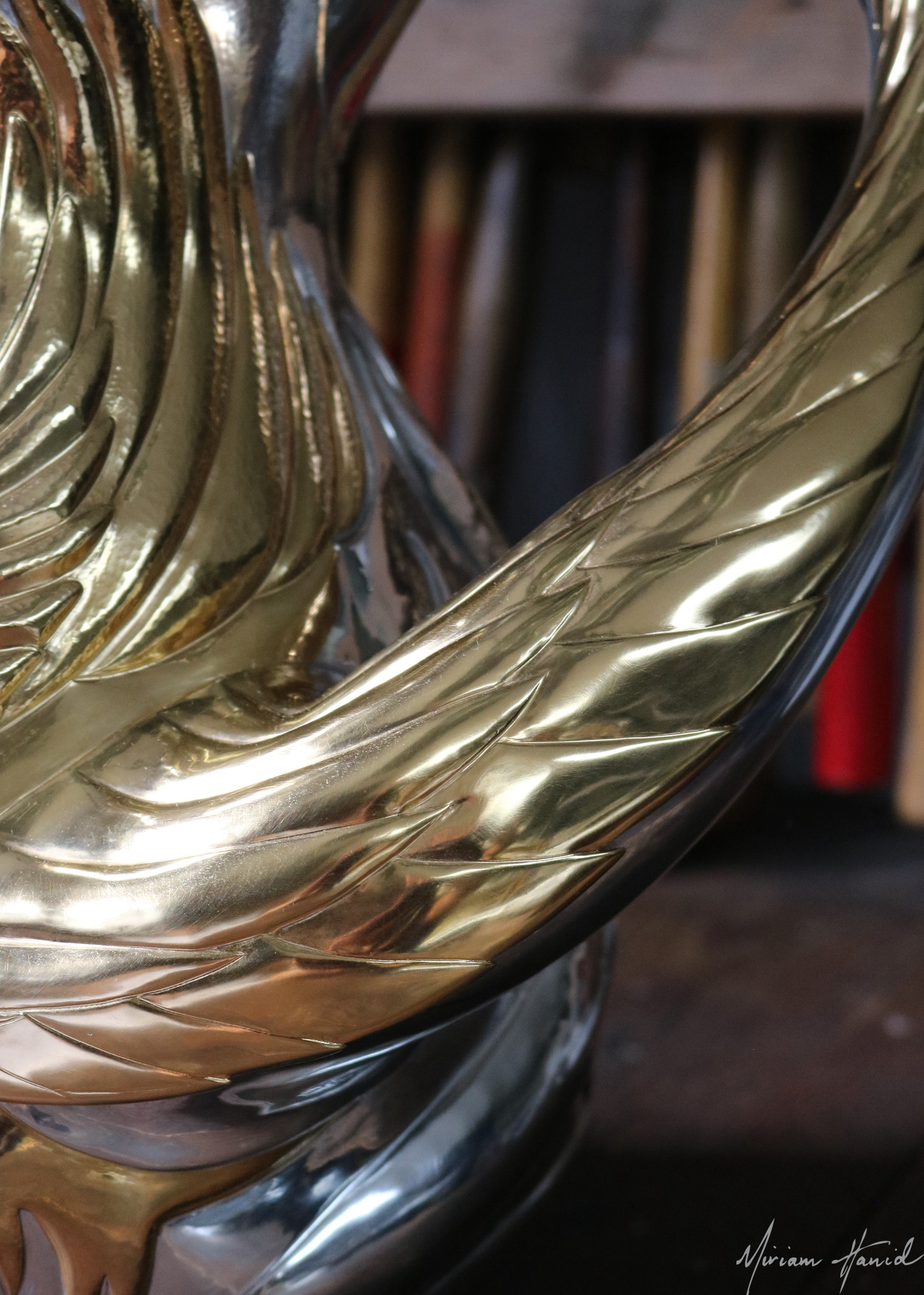
I worked my design using specialist chasing and repoussé techniques within the main body of the jug, which includes the phoenix with its majestic wings, and scroll details drawn from around Temple Newsam. The latter were integrated with dynamic flames, originating from a hidden egg at the base, which frames the hallmarks. The use of gilding within the piece references the connection to Ancient Egypt, Ra and the colours of gold within the phoenix itself, gold symbolising purity and immortality.

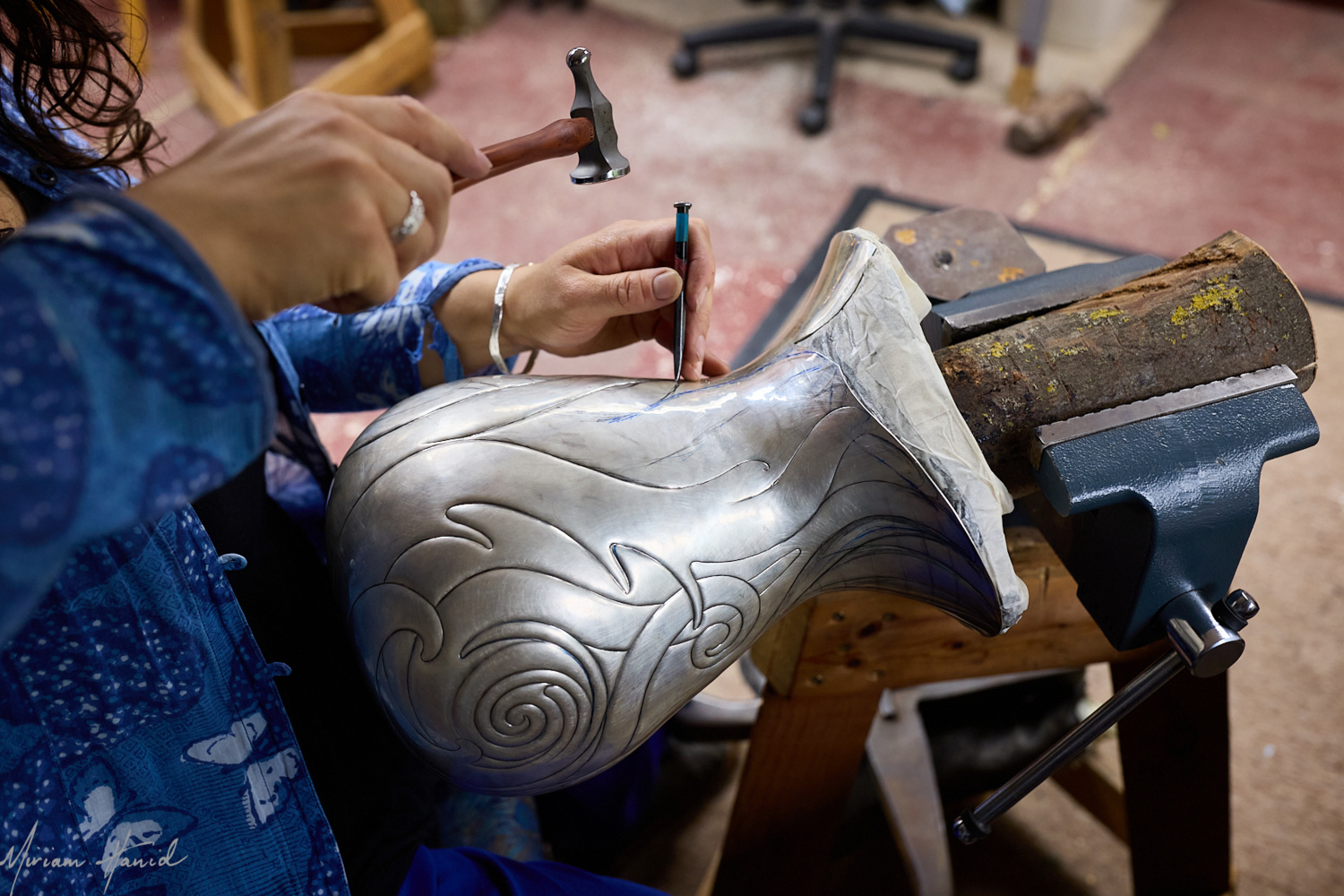
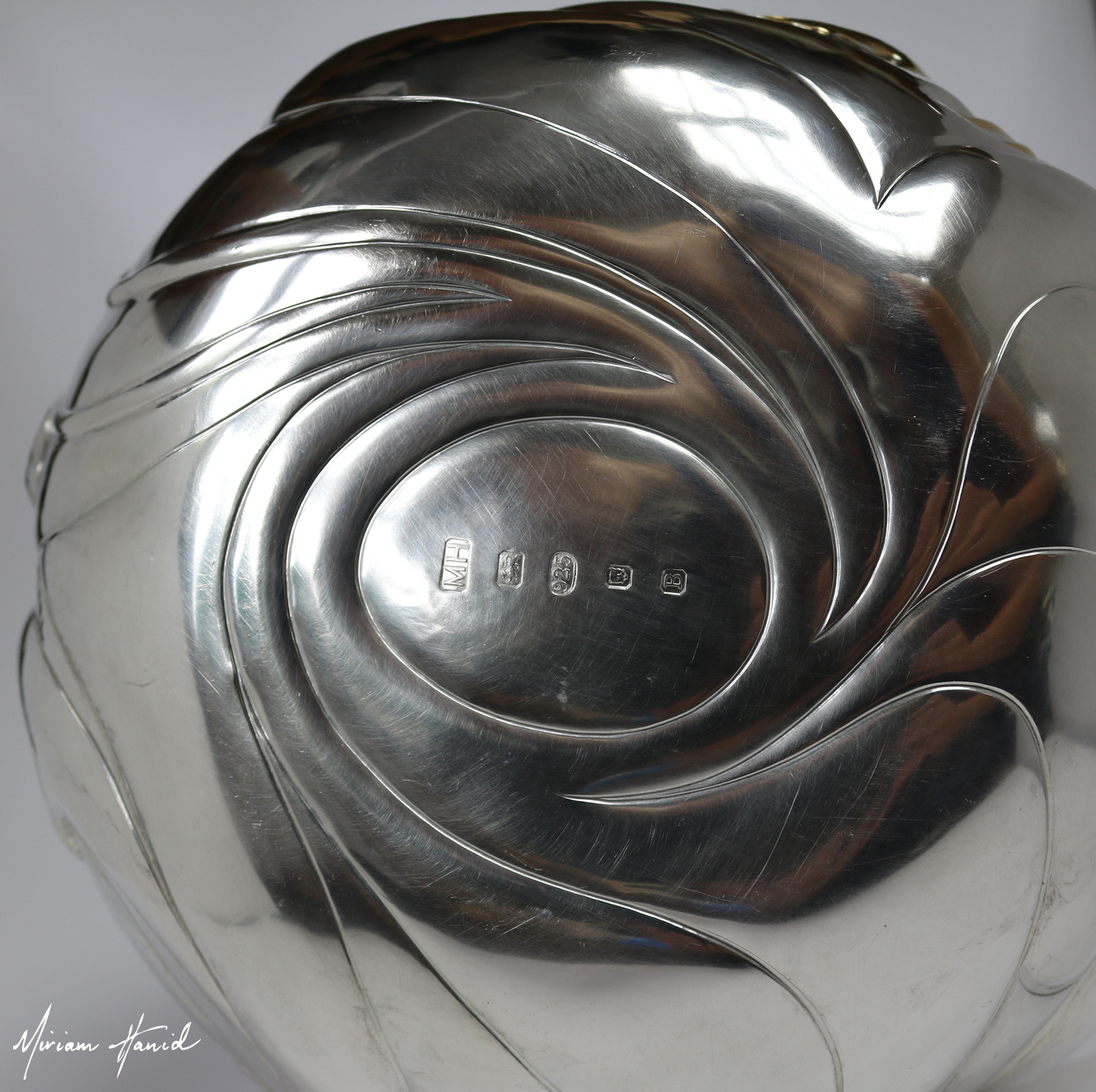
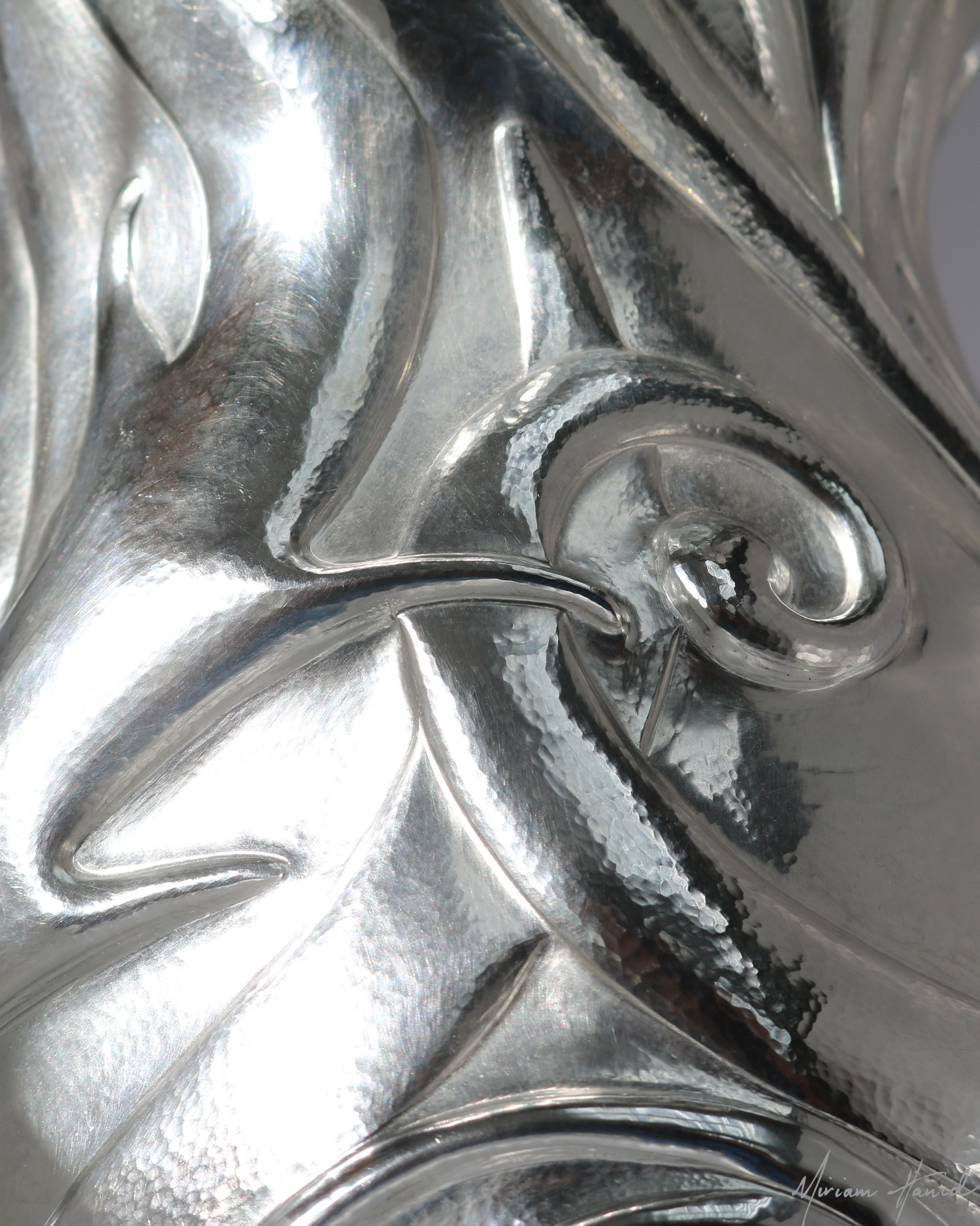
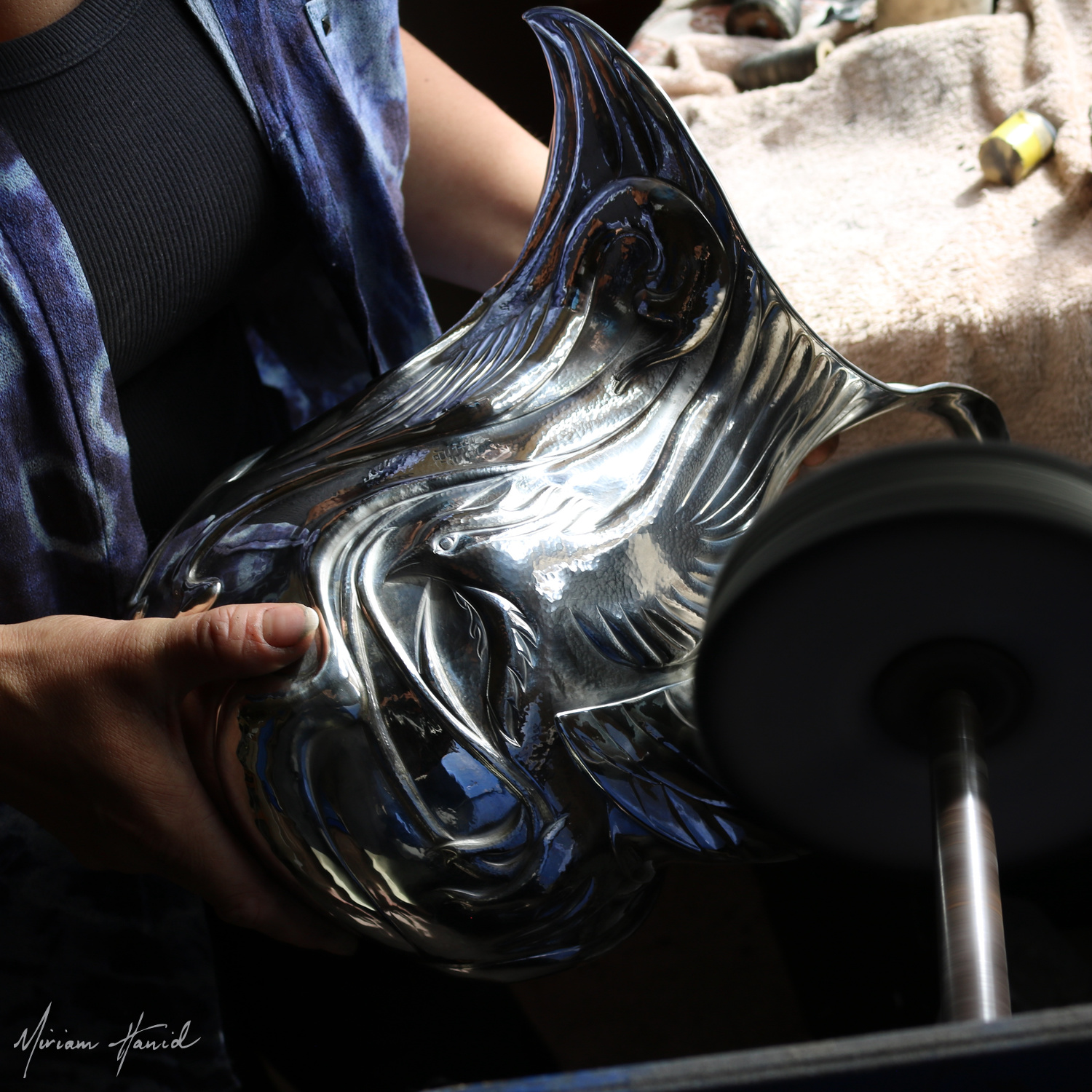
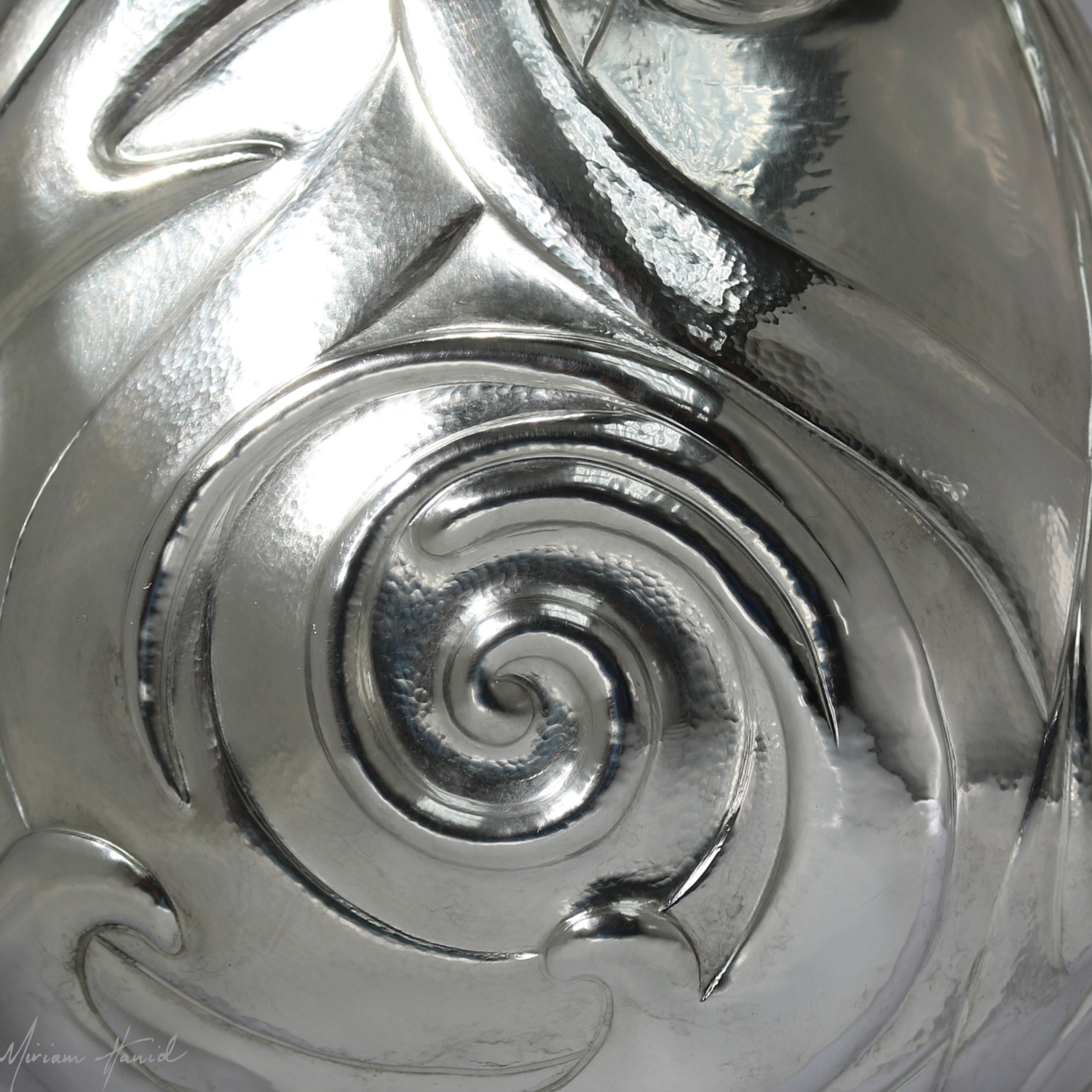
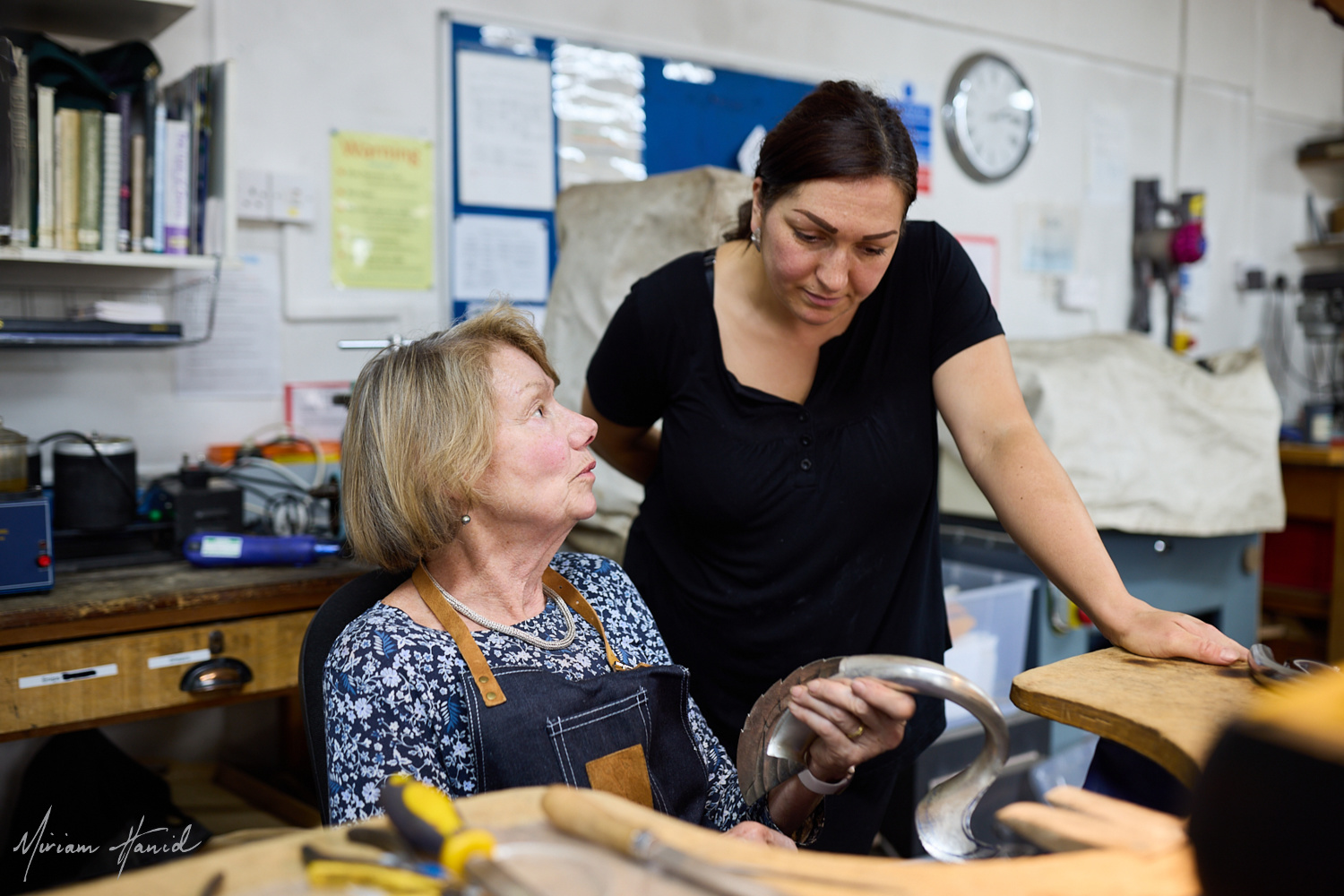
As well as collaborating with Jenny Edge for the handle, I used an array of specialist traditional silversmithing techniques such as spinning, delivered by Stefan Coe; hand raising, planishing, pre-polishing, by Ray Goodwin; my expertise in chasing and repoussé including planishing and some work done on the handle by my intern Alice Devienne; soldering and laser welding by Ottewill Ltd; and finally, 24ct gilding by Steve Wood. The result is a sculptural and narrative silver jug that I feel immensely proud to have created.
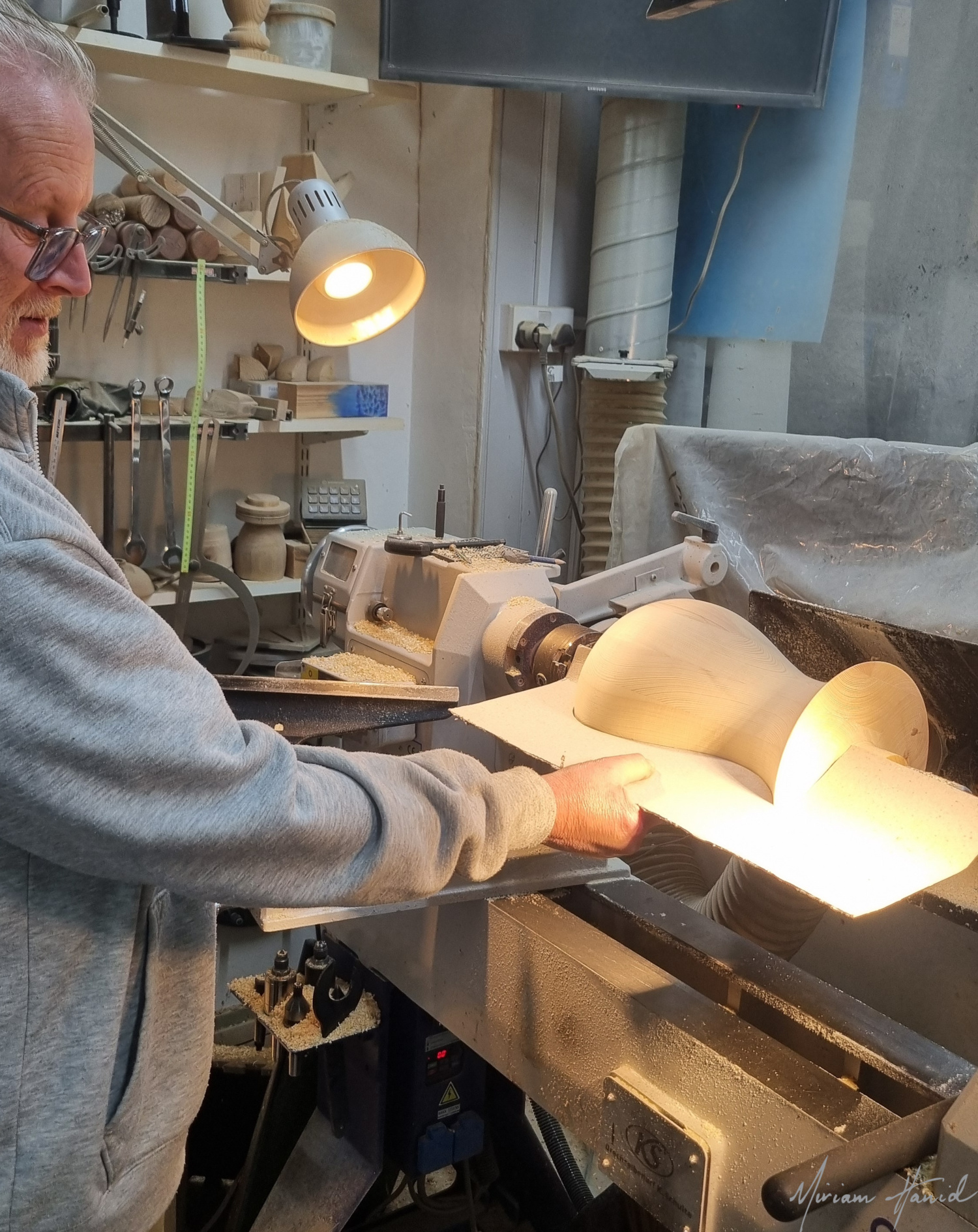
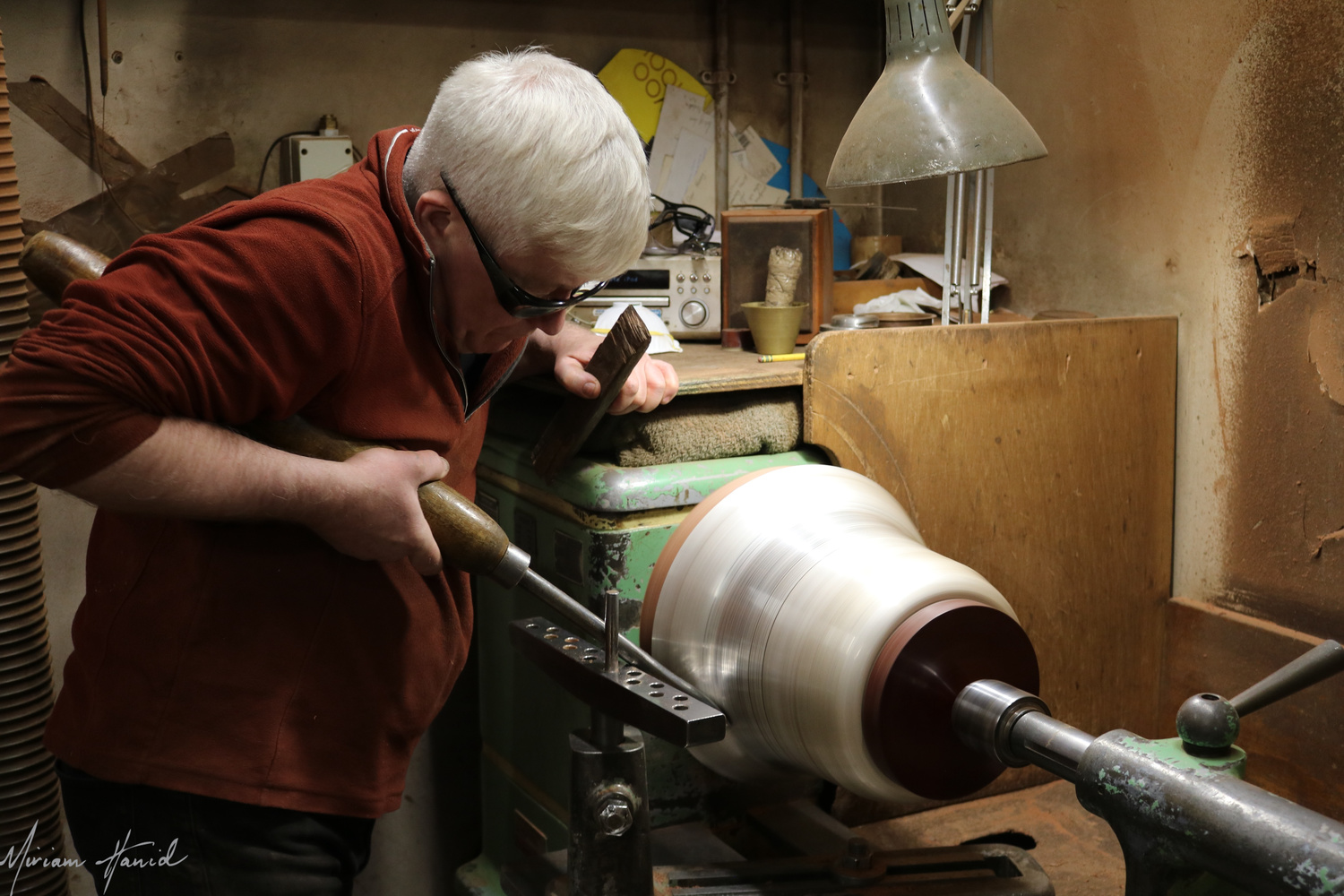
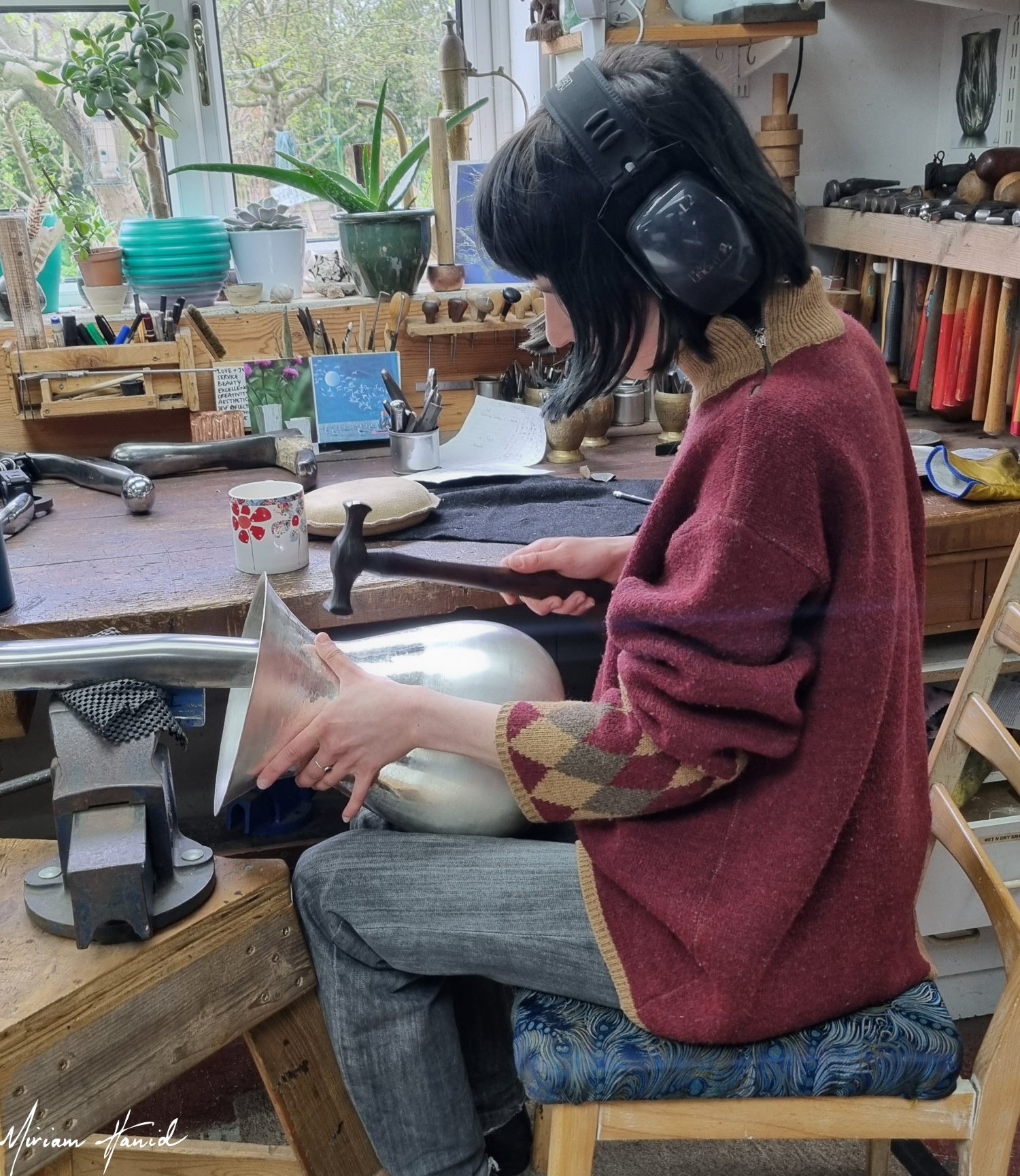
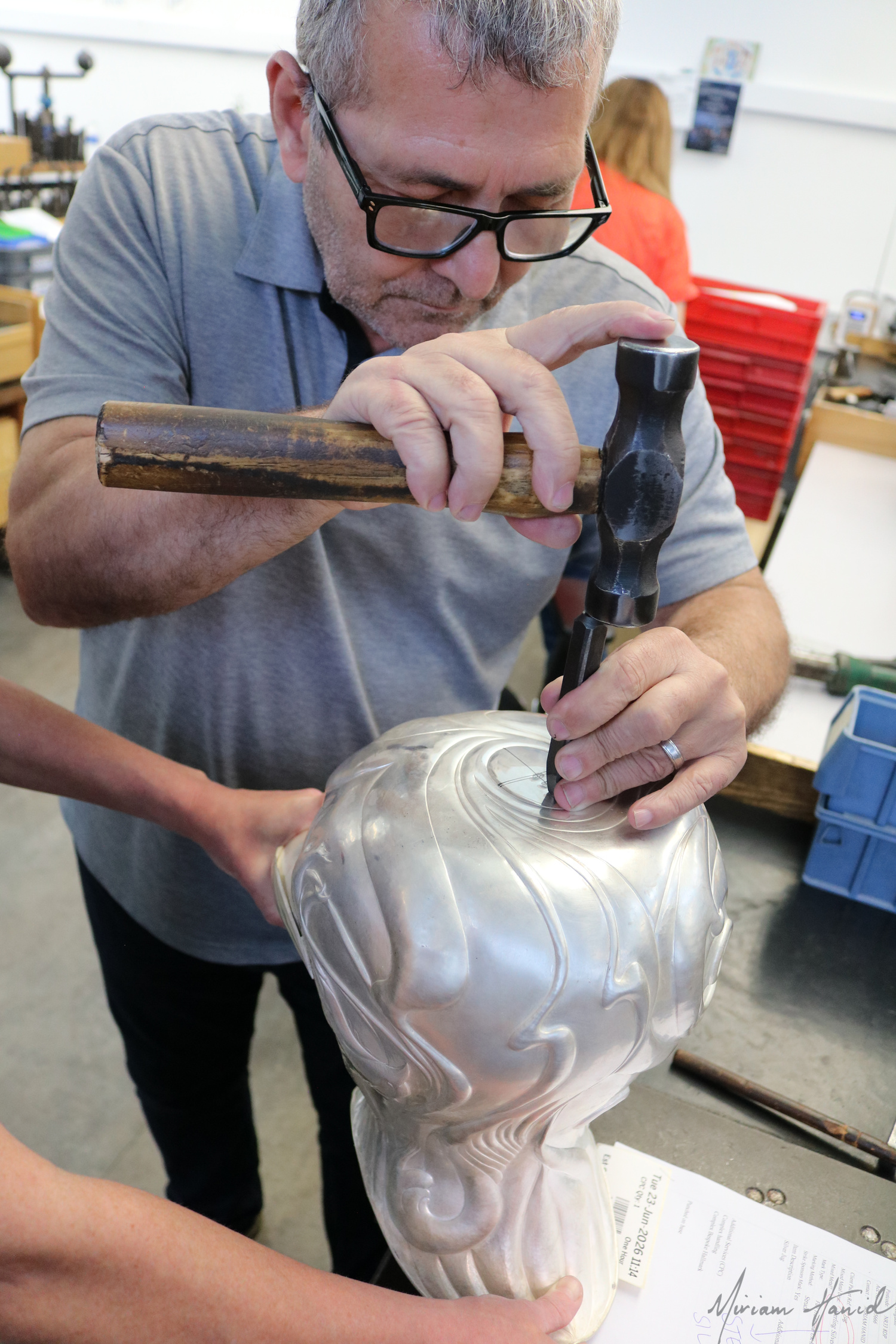
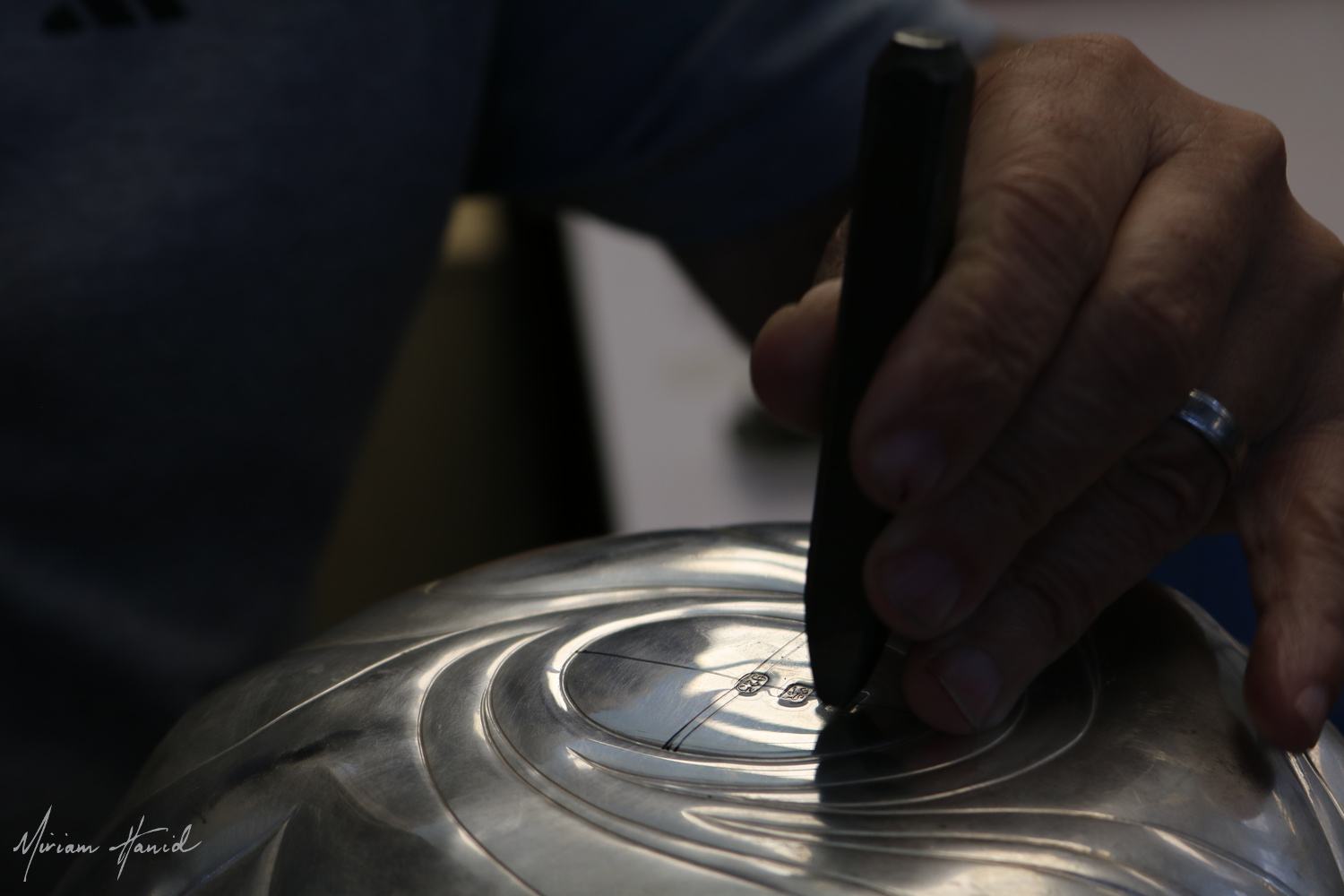
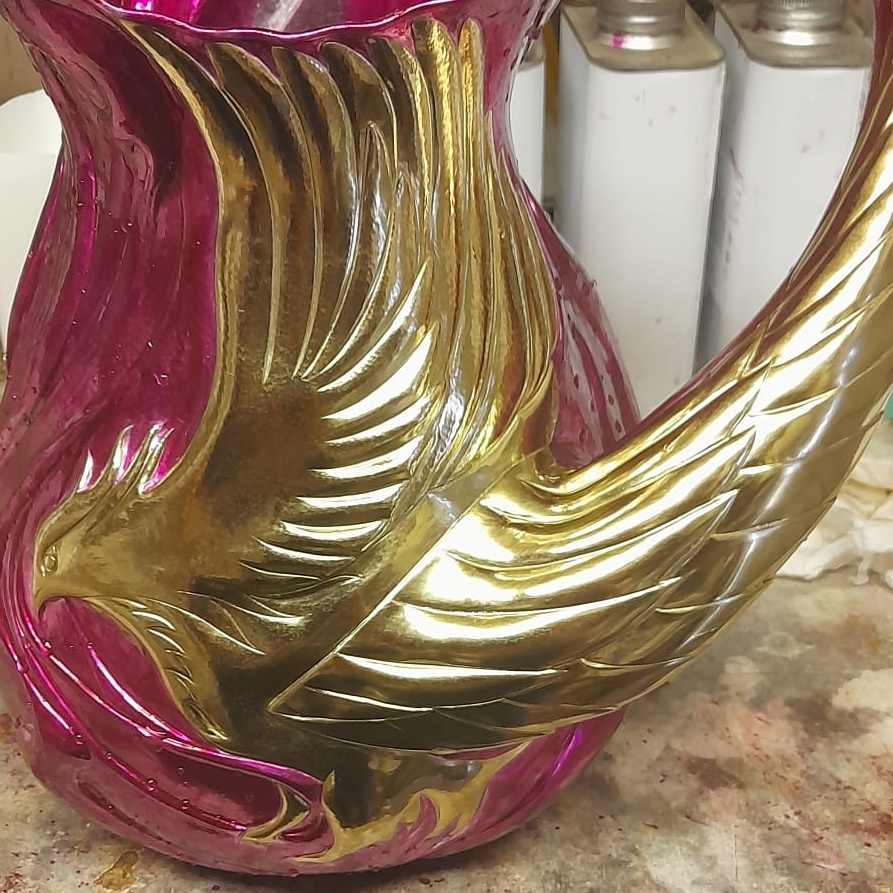
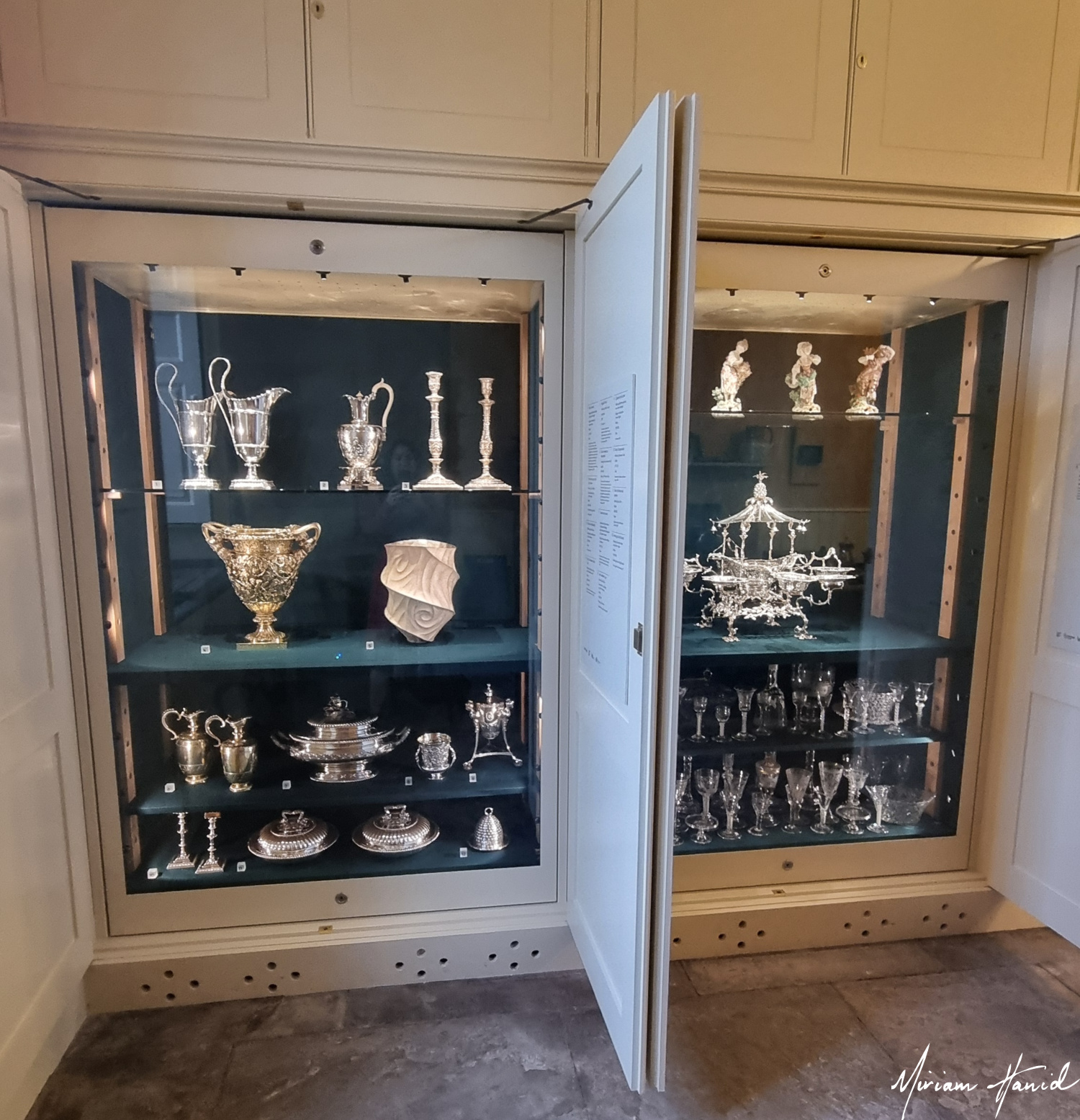
The Phoenix Jug detailed in this blog, will eventually be displayed in the newly restored Butlers’ Pantry. There, each item tells a different story – including tales of those who once lived at Temple Newsam, as the years spun by, defining their changing lifestyles. As such I hope the Phoenix Jug will be enjoyed at Temple Newsam for centuries to come, symbolically linking eras into the future.”
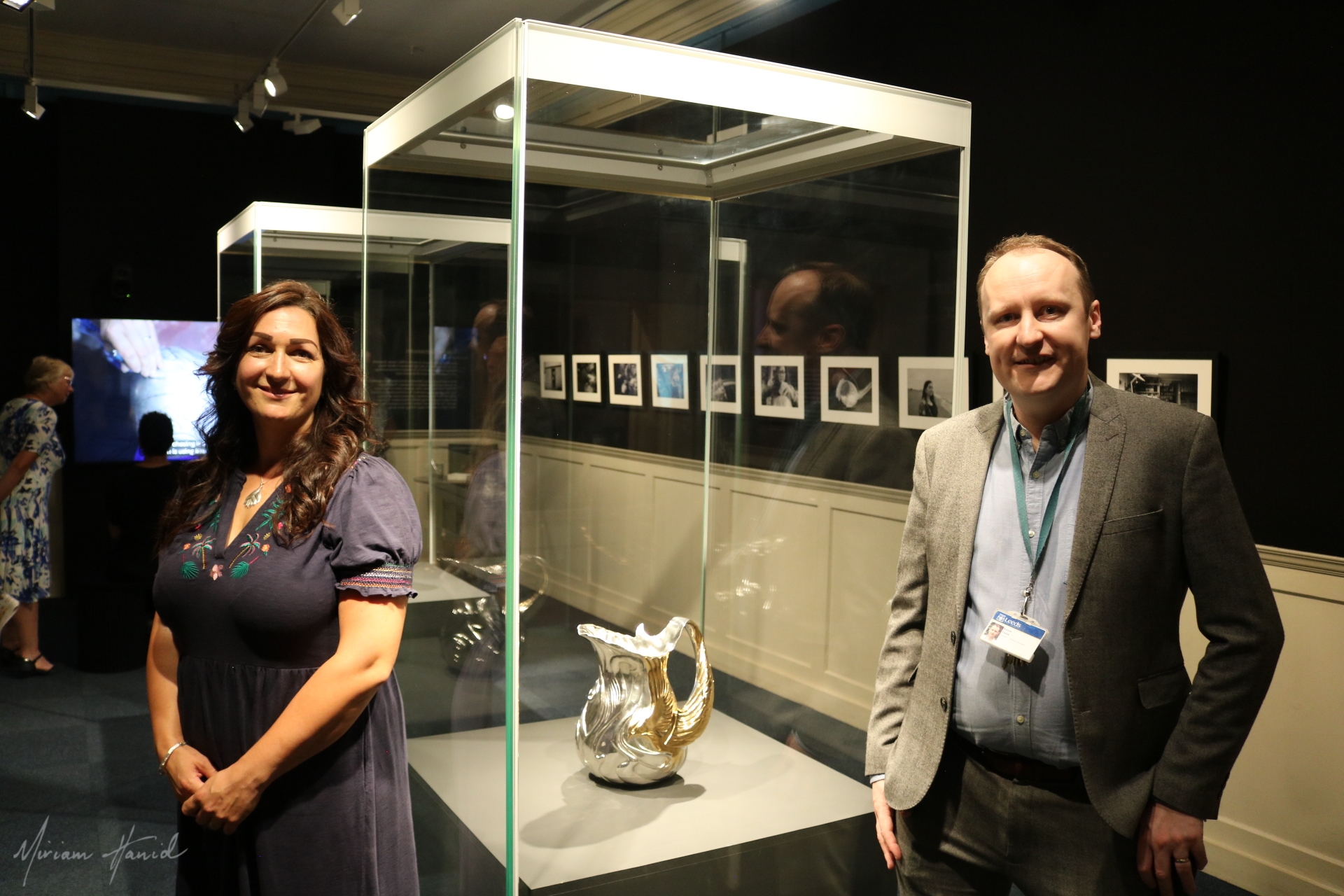
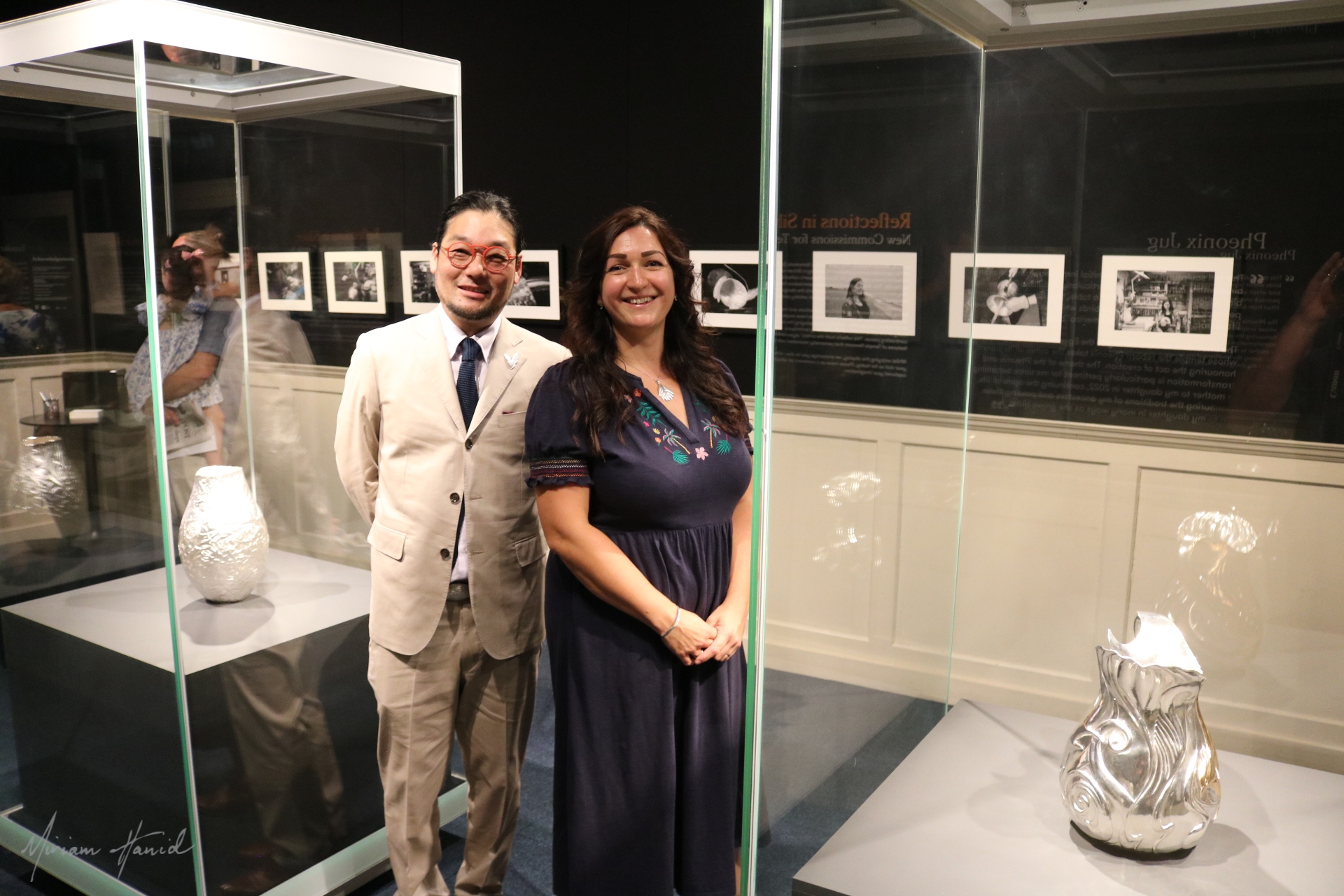
My ‘Phoenix Jug’ and ‘Dappled Swag’ Vase by Yusuke Yamamoto (below), which was commissioned by curator Adam Toole (above) at the same time, are currently in a dedicated display at Temple Newsam, until 23rd October 2026. For more details visit the exhibition page ‘Reflections In Silver’ on Temple Newsam’s site.
‘If you would like to commission a unique piece for your collection or as a gift, please visit my commissions page for some pointers about the process or simply get in touch directly via the contact page.
Sign up to receive my occasional newsletters at the bottom of this page (if you’re using mobile) or in the sidebar (if you’re on a desktop computer).
You might also be interested in visiting my shop to see the ready-made pieces that are currently available.